

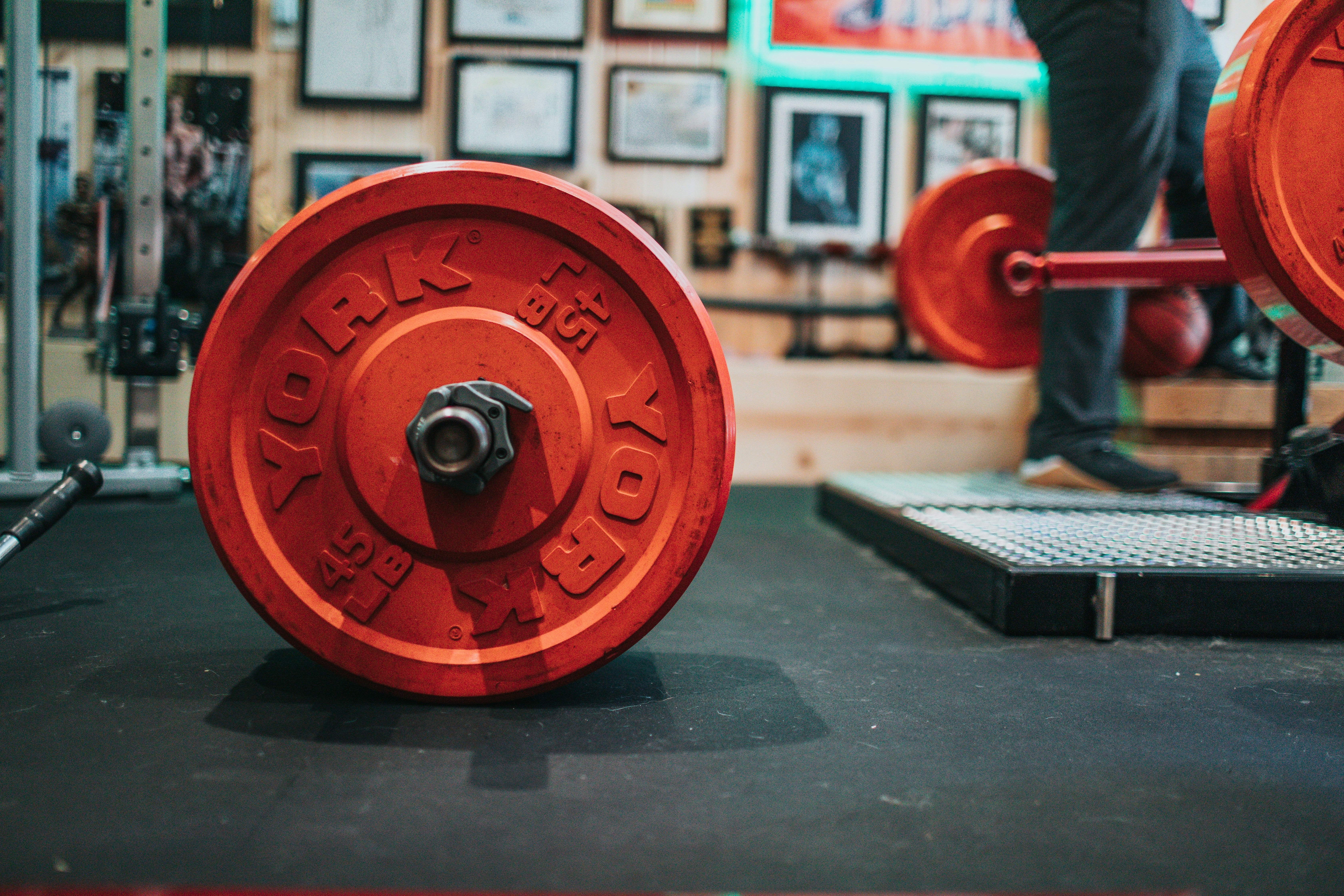
My favorite movement at the gym is the deadlift: you hinge, take the slack out of the bar, push into the ground, pull, and then lock out at the hips.
I spend a lot of time deadlifting. All told, I’m in the gym for six to eight hours per week, and this comes on top of my job as a writer, my family obligations, and the volunteer coaching I do in my community. And so it’s not unusual for people to ask me some version of: “What’s all this deadlifting for?”
The simple answer: my grip, legs, core, back, and arms—an utterly elegant full-body exercise. But the deeper answer is consistency, concentration, patience, perseverance, the satisfaction of experiencing gravity, and the feeling of being alive.
The physical and mental health benefits of weight lifting are well documented. Weight training can help you maintain muscle mass and strength as you age, as well as better mobility, metabolic, and even cardiovascular health. It may help ease or prevent depression and anxiety, and promote mental sharpness.
And yet, regardless of why anyone starts lifting weights in the first place, most people I know who stick with the sport over the long haul don’t do it because it’s a means to an end. For us, lifting weights becomes a transformative practice to be undertaken primarily for its own sake, the byproduct of which is a nourishing effect on the soul.
In the weight room, there are no office politics. No luck. No algorithms. No subjective judgments on whether or not you did a good job. There is only a direct relationship between effort and outcome, one that can be measured in the most objective manner possible: pounds or kilos on a bar. This sort of clarity is exceedingly rare in modern life. It’s also incredibly satisfying.
In knowledge work, for example, a job well done is almost always contingent on external factors like office politics, the opinions of your supervisors, or the mood of your clients. Whether or not my writing lands with readers (let alone critics) is based on all manner of variables outside of my control. Even in many sports, outcomes are affected by things like weather, equipment, officiating or the performance of teammates.
But in the weight room, it’s just you and the bar. You either make the lift or you don’t. If you make it, great. If not, you train more, and try again. Some days it goes well, other days it doesn’t. Over time, it becomes clear that what you get out of yourself is proportionate to the effort you put in. It is as simple and as hard as that.
Training hard lends itself to a kind of straightforwardness and self-reliance that gives rise to an immense satisfaction, a satiating feeling that makes it easier to fall asleep at night because you know you did something real, something concrete, in the world.
Progress rarely happens fast. Consistency and patience are everything. If you force heroic efforts you get hurt. If you show up steadily you get stronger. Little by little you work toward something big. This is the mundane math of growth; and not just in the weight room, but in most worthwhile endeavors in life.
Everybody who trains experiences plateaus—weeks or even months when progress stalls. “In the land of the quick fix it’s radical, but to learn anything significant, you must be willing to spend most of your time on the plateau,” wrote Aikido master George Leonard.
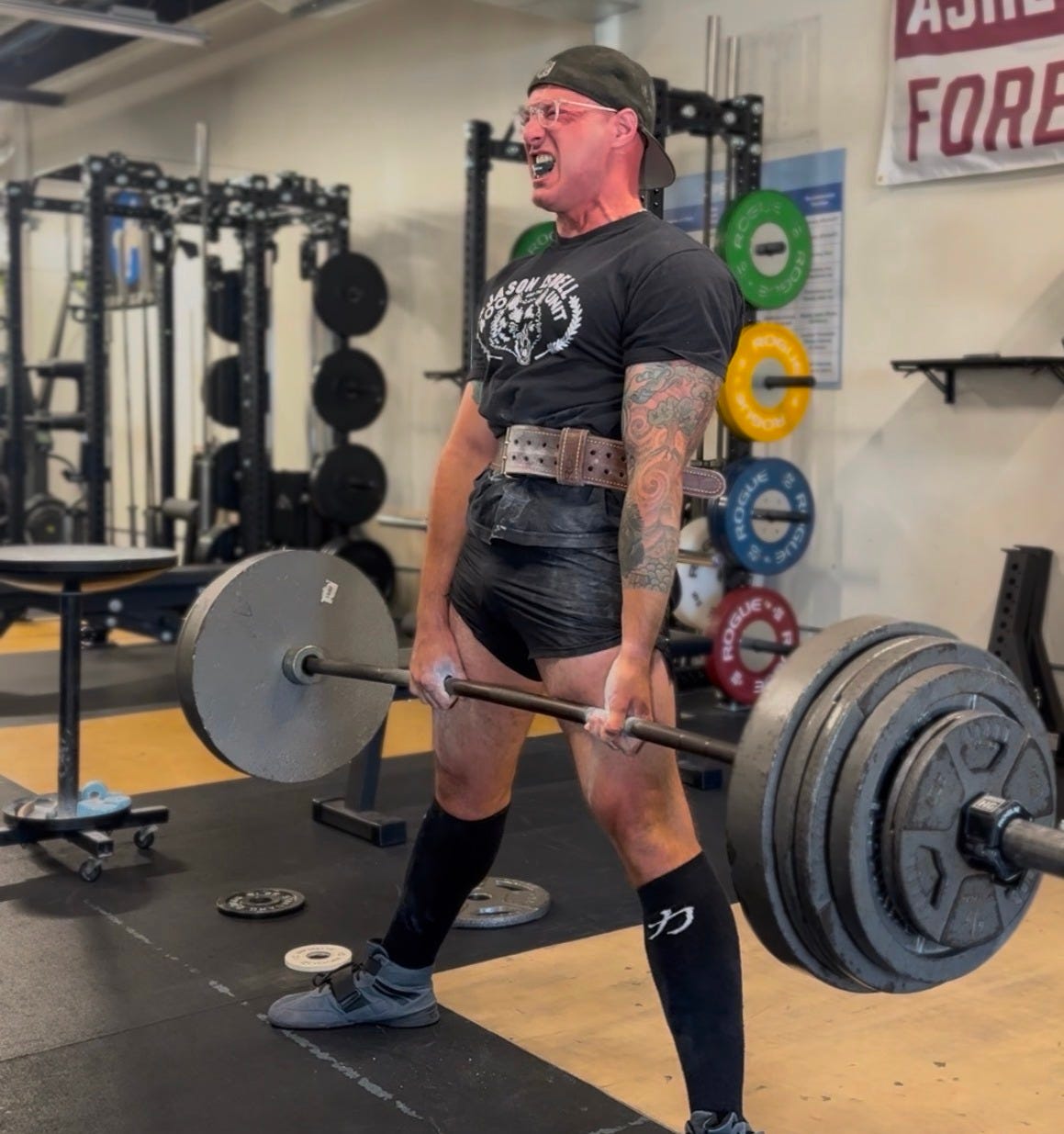
The plateau is not a purgatory. It tests you. It teaches you. It’s an inevitable part of the path. It’s also a welcome, necessary counterbalance to the frantic and frenetic pace of modern life, where everything must happen fast, where instant gratification is the name of the game.
Something I am getting increasingly sick of is how the marketers are winning everything. You can take a shitty 30-day course and market your way to millions. You can take a shitty book and market your way to the top of the New York Times bestseller list. You can take a shitty person and market your way to the presidency of the most powerful country in the world. You cannot, however, market your way to a 2.5x bodyweight deadlift.
Some will say, okay, all true, but c’mon, training is so dull. It’s the same barbell, same people, same gym. Life is short! Live! But hidden in that sameness are what decades of research show to be the fundamental conditions for human flourishing:
Autonomy: A sense of agency and control.
Mastery: Progress that is clear and earned.
Belonging: You become part of a community.
The zen of training is not about achieving a specific result and then suddenly becoming content, an illusion we chase outside the gym too. The zen of training—the joy, the fulfillment, the hard-earned calluses, the growth—resides in the process, in the journey. No hack, no short-cut, no AI-optimized workflow will ever do this for you. Only you can do this.
Doing hard things that align with your values and overcoming challenges is one of the most satisfying and underrated things. You gain discipline, self-respect, and self-confidence. You gain evidence that you can navigate discomfort. You feel fully alive.
There’s an old zen aphorism: Before enlightenment chop wood, carry water. After enlightenment chop wood, carry water. It makes for great training advice too.
The goal is never just the goal. The goal is the person you become along the way. You may think you are working on the iron, but the iron is also working on you.
"consistency, concentration, patience, perseverance" gets almost anyone a one way in this world.
Thanks Brad. Last January I bought 30 of your books for my construction company. It helped and is still helping to define and refine the meaning of our work. Moving the pile of gravel is about much more than moving the pile of gravel.