

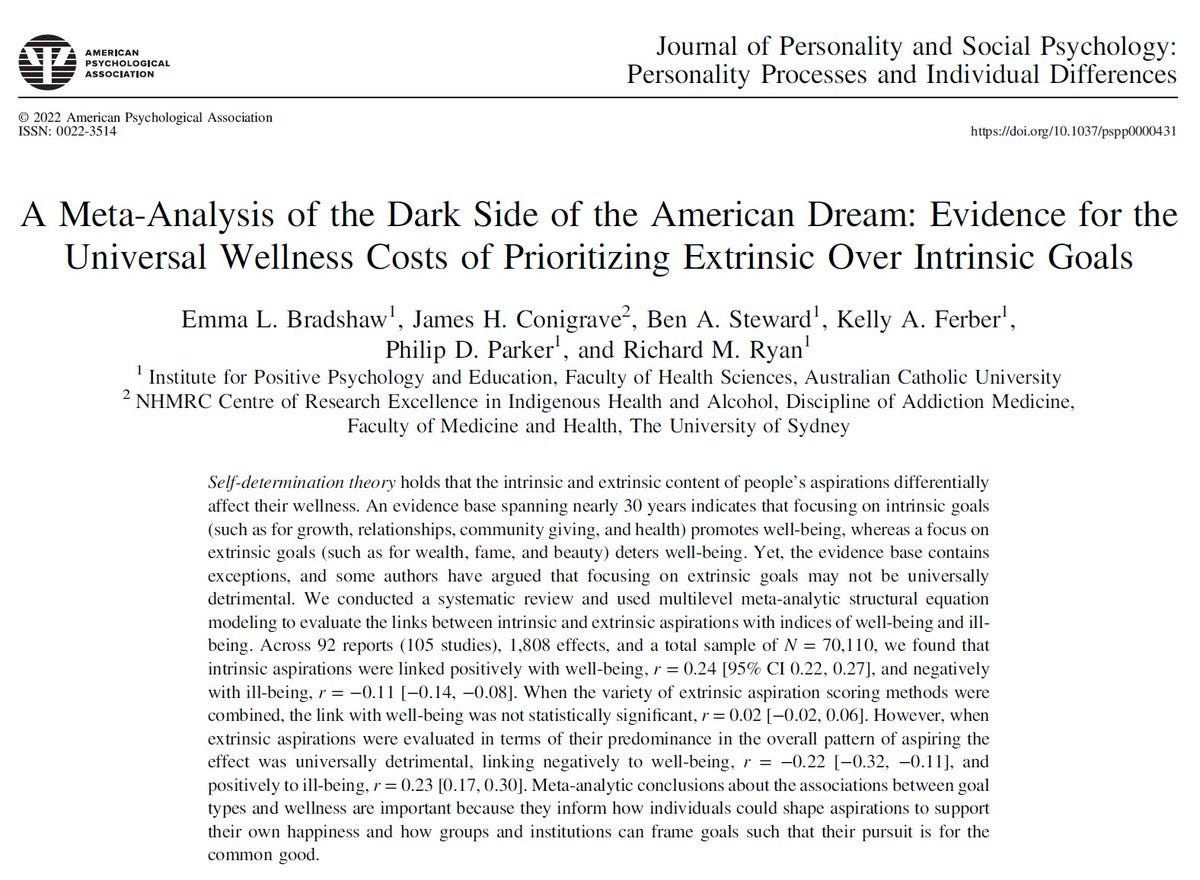
A study with over 70K people found those who obsess about being the best have significantly worse outcomes than those who are focused on growth and improvement, and who define success on their own terms.
It’s a mindset all the greats share and it’s crucial to their success: Don’t worry about being the best. Worry about being the best at getting better.
Success and failure both have their trappings. With success you suffer from the arrival fallacy, from the emptiness that comes with realizing achievement doesn’t actually lead to lasting fulfillment, it doesn’t fill the holes we all have inside.
With failure, you become so disappointed, so caught up in comparing yourself to others, that you get overwhelmed and give up. You step off the path early and sacrifice so much potential.
When you shift your mindset from "I want to be the best"... to... "I want to be the best at getting better" you become more resilient to both success and failure. You learn from each, and then get back on the path. You avoid the emotional roller coaster that comes with worrying about things outside of your control. You focus on digging where your feet are, which, paradoxically, gives you the best chance of getting where you want to go.
"Mountains should be climbed with as little effort as possible and without desire. The reality of your own nature should determine the speed. If you become restless, speed up. If you become winded, slow down. You climb the mountain in an equilibrium between restlessness and exhaustion. Then, when you're no longer thinking ahead, each footstep isn't just a means to an end but a unique event in itself. This leaf has jagged edges. This rock looks loose. From this place the snow is less visible, even though closer. These are things you should notice anyway. To live only for some future goal is shallow. It's the sides of the mountain which sustain life, not the top. Here's where things grow."
—Robert Pirsig, Zen and the Art of Motorcycle Maintenance
Defining “Better”
It’s important to acknowledge that better can mean multiple things at the same time: It can mean performance and objective measures—deals closed, weight lifted, miles run, awards won.
But it can also mean character—becoming kinder, stronger, wiser.
The things in which we work on, and the way in which we work on them, also work on us. The word character comes from the Greek charassein, meaning “to engrave or stamp upon.” When we throw ourselves into worthwhile projects and pursuits, we engrave or stamp upon ourselves the type of person we are becoming.
To be clear, outcomes do matter. It’s totally normal to want to achieve. Sometimes there are very real financial implications that accompany external success. But it’s also true that you don’t become a better performer—or a better person—on the medal stand or at the celebration for your promotion. You become a better performer and and a better person in the process you took to get there. It’s also where you find lasting fulfillment.
Being the best is ephemeral; you either get it or you don’t, and then what? But being the best at getting better—that’s a commitment to growth and mastery that lasts a lifetime.
A simple way to bring this mindset to life is to make a practice of coming back to the work itself. After big wins or tough losses, give yourself a set amount of time to celebrate the victory or grieve the defeat, but then return to doing the work instead of thinking about it. It requires a gentle yet firm persistence, but it keeps you grounded in the process. It prevents you from becoming addicted to the high of external validation or stuck in the lows of failure.
When you identify with the work, find satisfaction in the work, and make the ultimate goal getting better, the results tend to take care of themselves.
I get your point and largely agree that shifting from obsessing over being “the best” toward focusing on growth is beneficial. But it’s worth being careful about the way the original study itself framed its findings as strong “evidence.”
Bradshaw et al.’s meta-analysis found correlations between intrinsic goals and positive outcomes—but correlation alone doesn’t equal proof or clear causation. The original study authors themselves interpreted these correlations as evidence of a universal pattern, which might overstate the strength of their findings given the inherent limitations of self-reported data and observational methods.
Your general conclusion about mindset is sound, but it’s important to recognize that even well-designed studies sometimes claim stronger evidence than the data truly support. Real-world success and well-being are complex, and external validation can sometimes support growth rather than harm it, depending on context and personal interpretation.
Bottom line: the mindset you describe makes sense—but we should acknowledge where the study itself might have overstated its case.
This reminds me of something Corey Wilks once said (and I'm paraphrasing): You should do something you care so much about that you would keep doing it even if you never made any money doing it. I think focusing on growth and improvement rather than being "the best" flows naturally from that orientation.