

This past weekend, I was in Washington DC to visit family and record two of my favorite podcasts: Plain English with Derek Thompson and Deep Questions with Cal Newport.
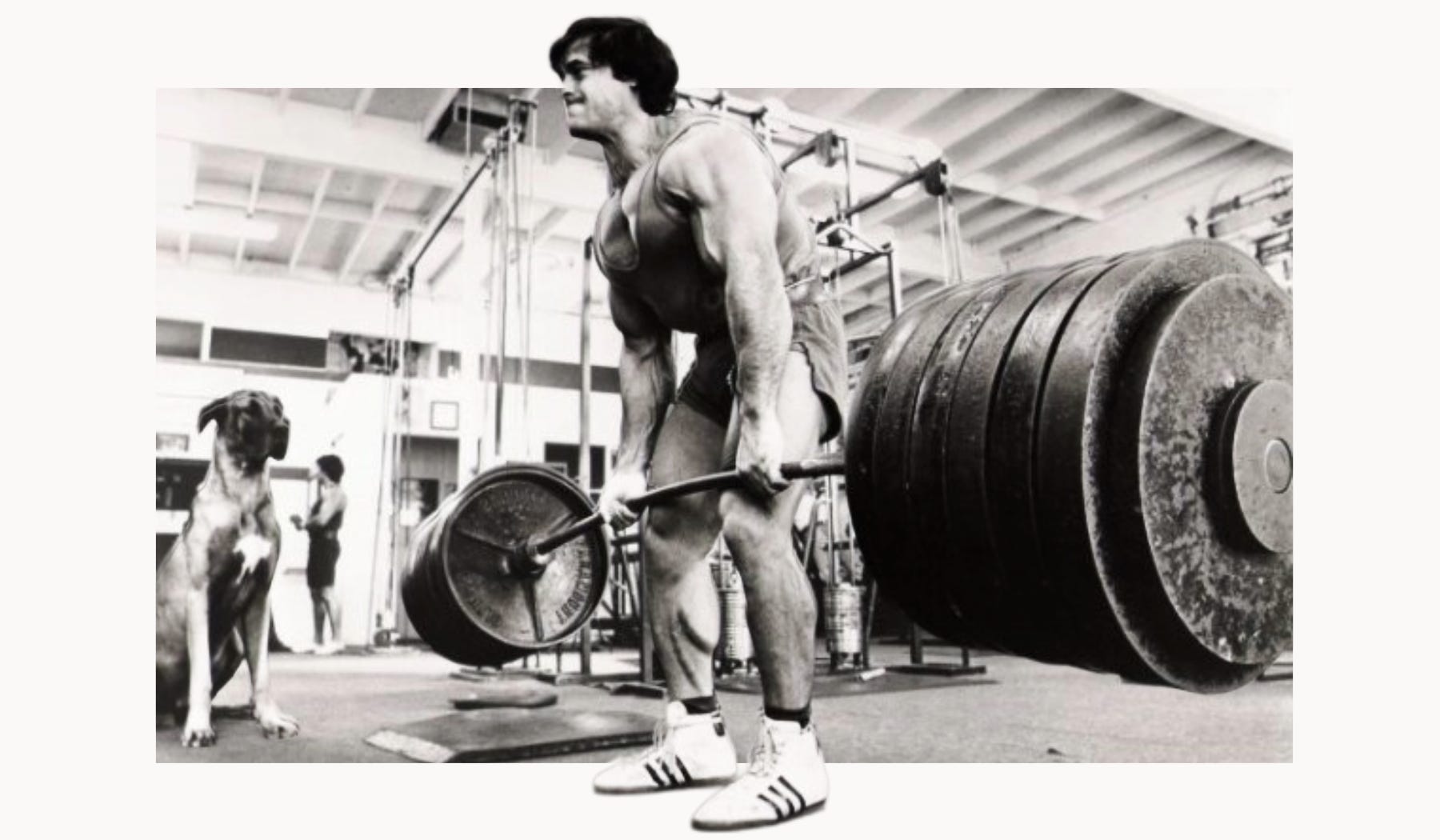
While both podcasts were ostensibly focused on The Way of Excellence, we spent a lot of time talking about deadlifting. At first I found this strange. Is lifting a barbell from the ground to my hips really the most interesting part of my life?
But the more I sat with the question, the more I think I understand it. It’s not that deadlifting is special. It’s that deadlifting is concrete and unfakeable—which, in a world that is increasingly ephemeral and illusory, makes it rare, if not in some way, even countercultural.
You can’t outsource deadlifting to AI. Deadlifting isn’t concerned with the velocity of the internet. There is nothing ephemeral about it. It’s not lifemaxxing or retardmaxxing or whatever other bullshit maxxing is trending on the internet. You can’t SEO or market your way to a good deadlift. You either lock the bar out, or you don’t.
Deadlifting is but one of many examples. Others include pottery, woodwork, cello, glassblowing, or gardening. What all of these activities share is a path toward satisfaction that is not wishy-washy or contrived. These pursuits do not entail grandiose visions of changing the world or reinventing industry. They are neither politically motivated nor do they require schemes.
What they are is simple and real.
When the barbell drops, it drops. When you want to run a marathon in under three hours but go 3:04, the result hits you right in the face. When the legs of the chair don’t fit into the base, the dilemma is as material as anything. The blank page either fills with words or it does not. The flower either blooms or wilts. The joke either lands with laughter or is met with awkward silence.
It is extremely satisfying to be working with integrity on something concrete, when your successes are earned and your failures cannot be rationalized by technical jargon, corporate mumbo jumbo, or social media hot takes. Striving for excellence of this sort—doing real things, in the real world, with real results—keeps you grounded, both literally and figuratively.
In his 2009 book Shop Class as Soulcraft, the philosopher Matthew B. Crawford writes that “despite the proliferation of contrived metrics,” many jobs suffer from “a lack of objective standards.” Ask certain white-collar professionals what it means to do a good job at the office, and odds are they may need at least a few minutes to explain the answer, accounting for politics, the opinions of their boss, the mood of a client, the role of their teammates, and a variety of other external factors. But ask someone what it means to do a good job at their next marathon, on their next deadlift, or in their pottery studio, and the answer becomes much simpler.
Psychologists have a name for this. They call it an autotelic experience: the fulfillment that arises from doing something well for its own sake, when you can connect your result directly to your effort. Autotelic experiences require a clear standard; not a contrived one set by a manager or an algorithm, but one built into the activity itself. The weight goes up or it doesn't. The pot holds water or it cracks. That directness is what makes these pursuits feel so different from much of modern life, where feedback is filtered through layers of opinion, politics, popularity, and abstraction. When the loop between effort, skill, and outcome is honest, something in you settles.
There’s a reason competence porn became a meme on the internet to describe shows like The Pit and The Bear. We are innately drawn to real people exerting real skill in the real world. Most people intellectually grasp its importance. But few actually do it.
It’s easier than ever to run around like a crazy person, cycle between a million hacks and fads, have 19 AI agents working on your behalf, and become an influencer on the internet without ever doing much of anything concrete or real. This may have surface-level appeal, but it’s decidedly shallow. And I think people can sense this, both in others and also in themselves.
The painter Frida Kahlo put it more bluntly: “I often have more sympathy for carpenters, cobblers, etc. than for that whole stupid, supposedly civilized herd of windbags known as cultivated people.”
The things that you work on also work on you. A disciplined practice humbles you. I can’t tell you how many times I’ve been stuck on a certain weight for weeks, even months. All my normal defenses and workarounds are useless. All there is to do is show up and train. This sort of experience forces you to face your limits. It makes you uncomfortable. It teaches you about resilience and setbacks. It demands you pay attention. It slows you down. It makes you appreciate the mundane. It teaches you about hard work. It forces you to confront gravity.
Even so, during the last few years, I’ve repeatedly wondered: Should I just stop deadlifting? I’m busy enough as it is being a dad and husband, trying to be a great author, hosting a podcast, coaching, walking my dog, and so on. I’d be so much more productive if I had that time and energy back. I can’t quite say why I’ve stuck with deadlifting, or even if it’s the right choice. But for now, my decision makes sense.
Just because you deadlift doesn’t necessarily make you a wise or interesting person. But I’m starting to think that it’s hard to be a wise or interesting person without a pursuit like this in your life—something that resists abstraction, that won’t let you hide behind cleverness or automation. Not just because it makes for good podcast conversation (though apparently it does), but because it's good for the soul.
This is a great collection of your thoughts Brad. I’ve thoroughly enjoyed your book, and I find myself reflecting often. The phrase that has stuck most is “Excellence is intimacy.”
In a world of novelty, autoletic experiences and intimacy are not just the spice of life they’re the main course for great human beings.
Thanks for all you do. Be blessed and encouraged this Easter.
I think the other thing that resonates about deadlifting and woodworking is that they tap into our humanity. Two hundred thousand years ago we were trying to pick up heavy rocks or make something out of a fallen branch. Even though our survival today might not depend on them, these activities (and others) still feels good today.