

I. Shitty Flow Is All Around Us
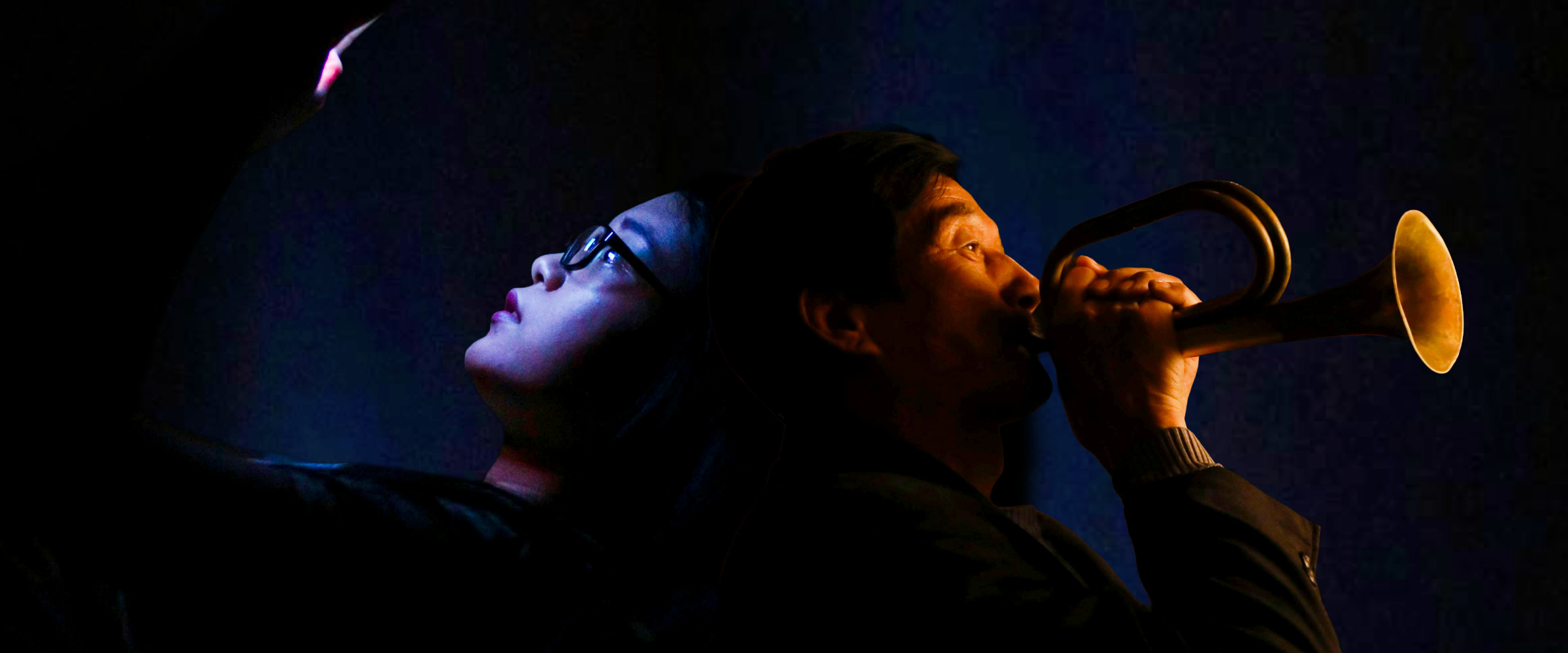
In 2021, the psychologists David Pizarro and Paul Bloom coined the term shitty flow to describe the experience of being in a flow state, but in ways your higher self does not desire. Examples of shitty flow include: doomscrolling on X, mindlessly swiping reels, making one prop bet after another, or constantly checking news sites for the most shocking headlines.
During these experiences, you may undergo certain hallmarks of flow, such as becoming fully immersed in what you are doing, losing a sense of time, space, and perhaps even yourself. But afterwards, you’re left with the sobering reality that your attention and energy could have been better spent. You feel anxious. You feel empty. You feel shitty.
A particularly stark example of shitty flow comes from the anthropologist Natasha Dow Schüll, who studied people playing slot machines in Las Vegas. She found the stickiness of gambling addiction is less about the potential for winning and more about the trancelike state gamblers achieve while using the machines. She coined the term machine zone to describe the experience of daily worries, social demands, and even bodily awareness slipping away.
Modern life is increasingly becoming one big machine zone.
II. Everything is Automated
With the click of a button, you can: order groceries; buy a car; sell a car; find a date; cancel a date; make millions of dollars; lose millions of dollars; fall in love with your favorite influencer; come to hate your favorite influencer. For $20 per month—the current cost of many AI models—you can also write essays, receive an answer to any question, and have a silicon data warehouse indulge your wildest fantasies, all within seconds.
It’s a wild time. And a weird one.
For over 99 percent of our species’ history, we lived in scarcity. Abundance is a recent phenomenon. Even more recent is the engineering that underlies ultra-processed food, ultra-processed entertainment, ultra-processed information, and ultra-processed connection. Evolutionary biologists use the term dysevolution to describe the disconnect between our hardwiring and our modern environments—and that disconnect is larger than ever.
We evolved to conserve energy and effort, to crave convenience. This is for good reason. Our early ancestors had no choice but to do hard things all the time: hunting, foraging, forming alliances, building shelter, making tools, finding mates, starting fires, and protecting children from early death. Today’s world is very different, and that’s a good thing. Nobody wants to go back to the life of a caveman.
However, if we cease to have any struggle in our lives, then our lives become empty. Because much like we evolved to crave convenience, we also evolved to exert ourselves on meaningful pursuits. The best lives contain a tension between both of these drives. Not everything should be hard. But not everything should be easy.
It’s the difference between the good kind of flow and the shitty kind. By design, you enter shitty flow without any real effort—you simply click a few buttons and numb out. Attaining the good kind of flow, however, requires effort: first, the effort to discern if it’s a worthwhile activity; and then, the effort to actually pursue it. It’s the difference between falling in love with an actual human versus falling in love with a programmable sycophantic machine. Getting into the zone writing an essay versus telling Claude or ChatGPT to write one for you. Catching fire in a basketball game versus gambling on one.
Shitty flow leaves you feeling like shit precisely because it requires no effort. Good flow leaves you feeling satisfied because it is earned.
III. Meaningful Struggle
I could wake up every morning at 4 AM and cold plunge alone on my back deck, and that would be very hard, no doubt. But I’m not sure I’d get anything out of it, aside from being very cold. For some, a regular cold plunge is life-changing. For me, not so much.
Meaning lies in the eyes of the beholder. It manifests when what you do aligns with your innermost values. I value craft, integrity, excellence, and love. The hard things I aspire toward—writing well, telling the truth, being there for my wife and my kids, increasing my deadlift via training hard—align with my values. I am happy to automate, outsource, and follow the path of least resistance in other parts of my life, but if I used AI to write for me, told people lies they wanted to hear, let screens raise my kids and replace my marriage, or used a forklift at the gym, my life would be decidedly worse. I’d have extra time, extra energy, and a dearth of meaning in my life—all of which I’d probably fill with shitty flow.
Herein lies a modern paradox: Life is easier. Life is emptier. There’s a reason Aldous Huxley’s Brave New World is a dystopia, not a utopia.
In 2022, a team of neuroscientists at McGill University in Montreal showed that when we apply effort to challenging tasks, it boosts activity in brain regions that respond to rewards. Essentially, the researchers looked under the hood and found the neural networks underlying the contentment and satisfaction we feel after a hard day’s work on something we care about. But here’s the catch: The neural activity associated with reward, along with the accompanying real-life feelings of accomplishment, was significantly greater in participants who viewed their effort as worthwhile. The more you believe your hard work matters, the more rewarding and satisfying you’ll find it.
There’s a difference between suffering for the sake of suffering and building meaningful challenges into your life. You can do a random hard thing because everyone else is doing it. Or you can do a hard thing with deliberate intention because it tracks with the person you are and want to become. Sometimes you need to do the former to jumpstart the process of figuring out the latter, but it’s the latter that leads to a good life.
IV. The Fight Against Diabetes of the Soul
What I dislike most about AI writing is that it converges around a homogenized mean. The whole thing has a synthetic feel to it: It’s not this. It’s that. It’s real.
What it actually is is soulless.
No doubt, in the short term it feels great to generate a fairly polished 1,000-word essay with the click of a button. But in the long term, it erodes your ability to write, and honestly, to think, for yourself. You become conditioned for convenience and ease. Your tolerance for effort declines. You trade the potential for genuine flow, and all the satisfaction it brings, for shitty flow. This theme explains much of the ennui that accompanies modern existence.
Arguing with anonymous idiots on social media instead of meaningfully disagreeing with a real person over a beer. Obsessively gambling on sports instead of actually trying to get good at one. Dating a robot instead of a human. Scrolling from one short-form video to the next instead of reading a book or watching a feature film. In all of these instances, not only are you surrendering to shitty flow, but you’re also eroding your ability to work toward and experience the real thing.
I’m not trying to be a moral purist. I gambled a ton my freshman year of college—that is, until I met a girl. A serious girlfriend, and all that came with it, was way more exciting than gambling. So much of our addiction to shitty flow stems from the fact that it fills the holes that, at one point or another, all of us share. The difference between my college gambling experience (over twenty years ago) and today is that now, gambling is at our fingertips and more enticing than ever. The same goes for nearly all the other common sources of shitty flow.
Studies show heavy consumption of short-form videos (e.g., TikTok) leads to a significant decline in frontal lobe brain activity, focus, agency, and self-control. Sports betting delivers anticipatory dopamine on demand, no effort required. Over time, the brain builds up tolerance to dopamine, requiring higher risks and bets to achieve the same satisfaction. As this tolerance builds, research shows it becomes harder to find enjoyment in sport for the sake of sport, and eventually, in all of life. This is the neurological mechanism of shitty flow: you’re overwhelming your reward circuitry without doing anything, all the while making it harder to exert effort on the types of pursuits that actually lead to a meaningful life.
If all you eat is Skittles and M&Ms, eventually you mess up your entire metabolism and get diabetes. Our collective addiction to shitty flow is giving us diabetes of the soul.
The treatment for diabetes of the soul is similar to the treatment for diabetes of the endocrine system. For the latter, you’ve got to replace ultra-processed shitty food with more nourishing whole foods. For the former, you’ve got to replace ultra-processed shitty flow with the real, more nourishing variety.
The average American is overweight and unhealthy. Yes, it has much to do with our system. In an ideal world, the environment would be designed to encourage and facilitate a nutritious diet and physical activity. There wouldn’t be fast food establishments on every corner. There wouldn’t be poverty. But while we work toward a more ideal world, we also need to acknowledge that we don’t live in one, and we don’t have magic wands to wave to create one.
The same is becoming true with the average American soul. It, too, is increasingly unhealthy, and I fear it will get much worse before it gets better. No policymakers are coming to save us. The systems profiting from shitty flow are the same ones lobbying against regulation. Not to mention, many of our legislators have already had their own brains turned to sawdust by shitty flow. Which means, at least for the time being, each and every one of us needs to fight this battle ourselves and in our local communities.
It’s not easy, especially when you are surrounded by shitty flow—when it’s on your phone and in your browser and sold to you at every commercial break. But just like you still have some agency to drive past the fast food restaurant instead of entering the drive-through, you still have some agency to bypass shitty flow in favor of the real thing. And the prescription is not complicated.
Train for a marathon. Learn an instrument. Join a choir. Make art. Coach a team. Read 30 books in a year. Play rec league sports. Write using your own brain. Get involved in a local theater group. Go on hikes. Watch sunsets. Train to deadlift three times your body weight. Grow tomatoes. Meet people in the real world. Put yourself out there. Challenge yourself.
None of these things requires a policy solution or a technological breakthrough. They require you to close your laptop, put down your phone, and maybe delete certain apps. The shitty flow will be waiting when you get back. It always is. But you might find you don’t miss it as much as you thought you would.
Thank you for reading. If you found this resonant, you’ll devour my new book, The Way of Excellence. It’s an instant New York Times bestseller that goes deeper on all the above.
This speaks in part to why I sold my house, have packed up and am moving to another country at 73. What's in front of me is hard: learning a new language, culture and ways of life, a return to riding horses several times a week, a way to return to adventure travel. Lots of irritations and problems ahead. That's what I signed up for.
There's a reason as to why I train for & run ultras, live on a farm, read books incessantly, and have a grudge-on for AI photography. Use it or lose it and I'd rather use than lose. If I could give this article a bouquet of hearts, I would.