

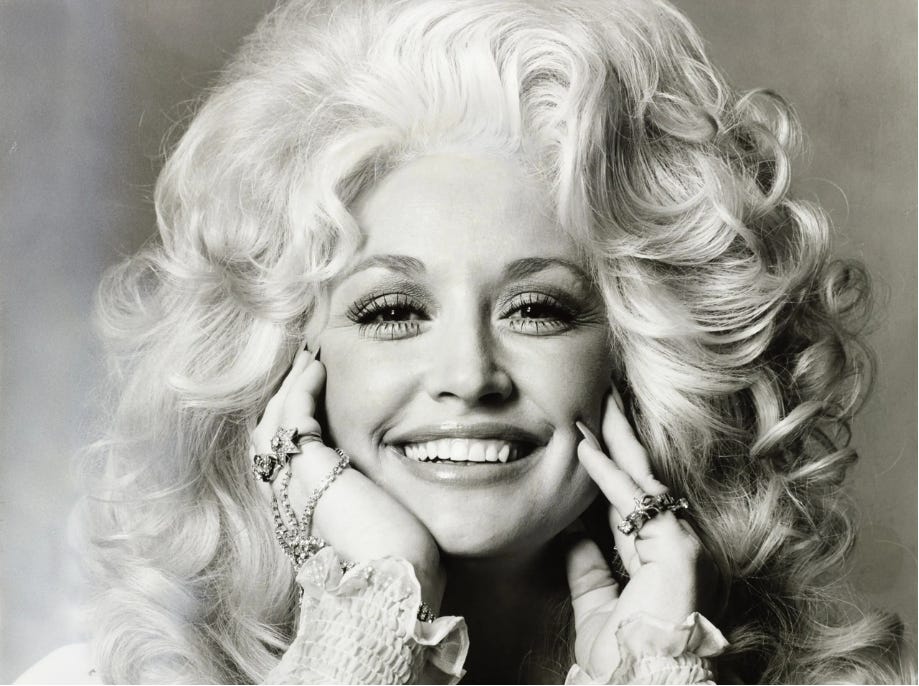
Dolly Parton was a generational singer and songwriter, a philanthropist, an activist, a proud Appalachian, a champion of reading and the power of literacy, fierce, and kind.
Dolly Parton was excellence.
Parton wrote “Jolene” and “I Will Always Love You”—two of her biggest hits—in the same day. By the end of her life, she’d written 3,000 songs, some for her and plenty for others. There’s no doubt she could write a hit, but she also loved the work.
Parton released 49 studio albums in a career spanning nearly six decades. Her highest charting Billboard release was an album called “Rockstar.” She put it out when she was 77 years old.
At 78, she collaborated with Beyoncé on “Cowboy Carter.”
To be in the game that long, to love the game that long, is extraordinary. I think often about the idea of lineage, about the value of legacy and how to pass forward the torch instead of trying to hoard the flame for yourself. Just imagine how incredible it must have felt for Parton to have Beyoncé singing one of her songs, and to be on that track.
Dolly Parton was the consummate craftsperson: skill, rigor, vision, mastery. She was serious. She was joyful. She had it all.
She shaped her work and her work shaped her, along with an entire industry.
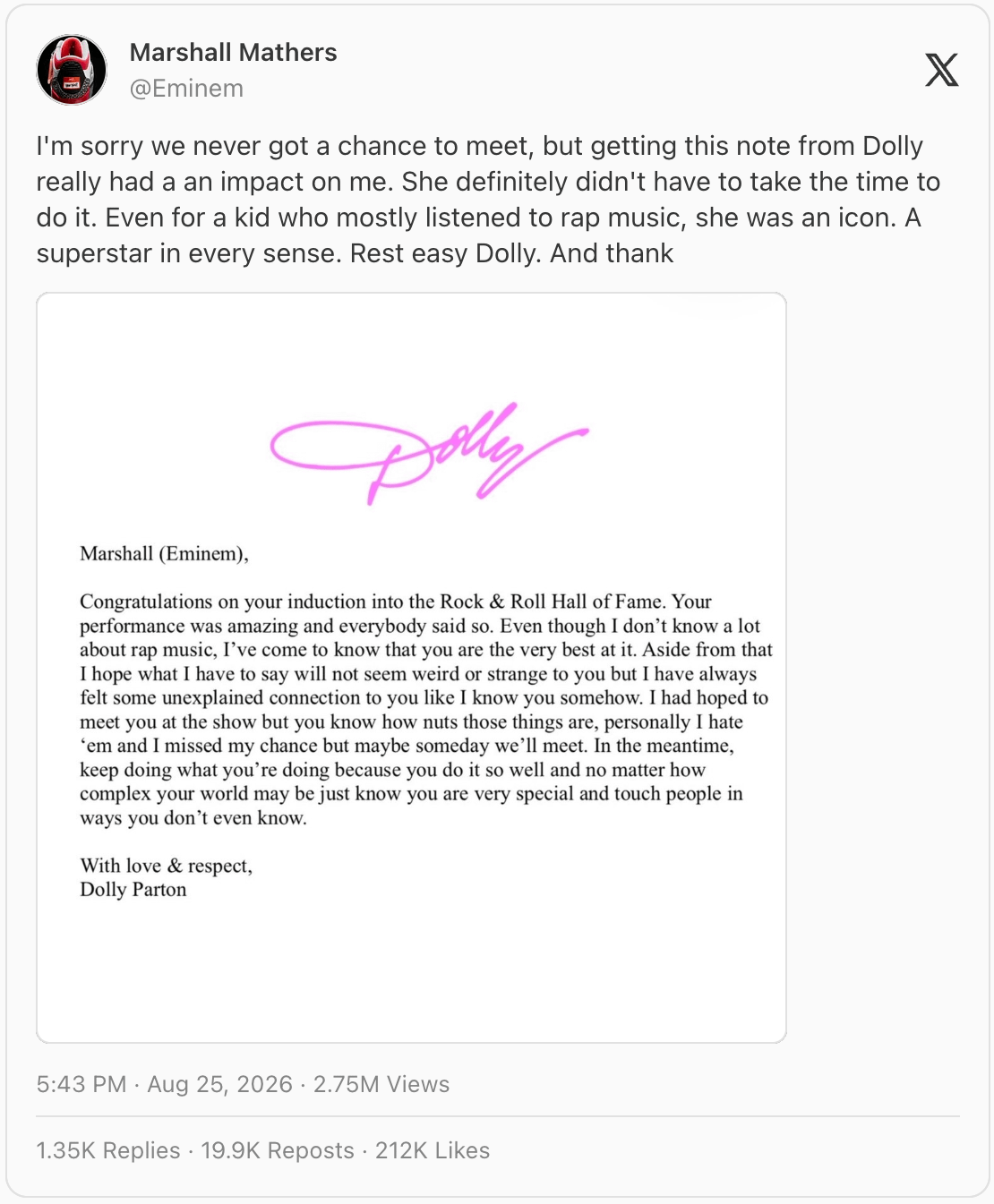
But her impact extended well beyond music. Parton grew up as one of twelve children in a one-room cabin with no electricity in the Smoky Mountains of Tennessee. Parton’s father, Robert, was a tenant farmer and tobacco sharecropper. She frequently recalled that while he was one of the smartest people she knew, his inability to read prevented him from fully chasing his dreams.
So, in 1995, at the height of her fame, Parton launched the Imagination Library. A program that mailed free books to kids. She said it was a tribute to her father and a way for her to give back to the community. All told, she gave away more than 300 million books to those who need them most.
Parton was married to her husband Carl Dean for nearly 60 years before he passed. Despite her flashy persona and public-facing career, she kept her marriage sacred and mostly out of the eye of her fans. She was an original “influencer,” but she also knew the value of privacy, and what fame untethered from reality could do to a soul.
“I fell in love with Carl Dean when I was 18 years old,” she explained. “We have spent 60 precious and meaningful years together. Like all great love stories, they never end. They live on in memory and song. He will always be the star of my life story.”
Dolly Parton was kind. She used her talents for good.
In 2020, she quietly gave $1 million to Vanderbilt, seeding early research that fed into Moderna’s COVID-19 vaccine—her fund is credited in a New England Journal of Medicine paper.
Even as her star rose, she never forgot about home. Her theme park, Dollywood, became one of the largest employers in the Smokies, and the company later covered 100 percent of tuition for its roughly 11,000 workers. In 2024, after Hurricane Helene tore through East Tennessee and Western North Carolina, she and her businesses gave $2 million to relief.
From growing up without electricity to becoming a superstar who brought countless others up with her, who helped increase literacy and fund science that went on to save millions of lives, Dolly Parton was the American Dream, personified. She was what her country always said it would be, and what it can be when it tries. She was the best of us.
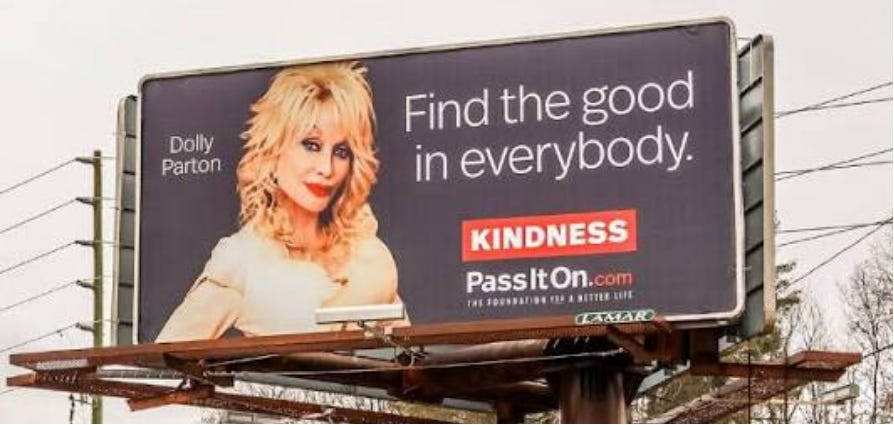
If excellence is a process of caring deeply, giving something your all, getting the most out of yourself, creating, and contributing, then Dolly Parton is as excellent as they come.
May her memory be an inspiration to us all.
There are only a handful of celebrities that make me cry when they pass. This woman must have been who she appeared to be based on the fact that maintain her persona would be hard to do over decades and meeting so many people who all had the same review of her... she was kind, she was real and she tried to always do the right thing.
*Superb* Excellent is what you use to describe steak.