

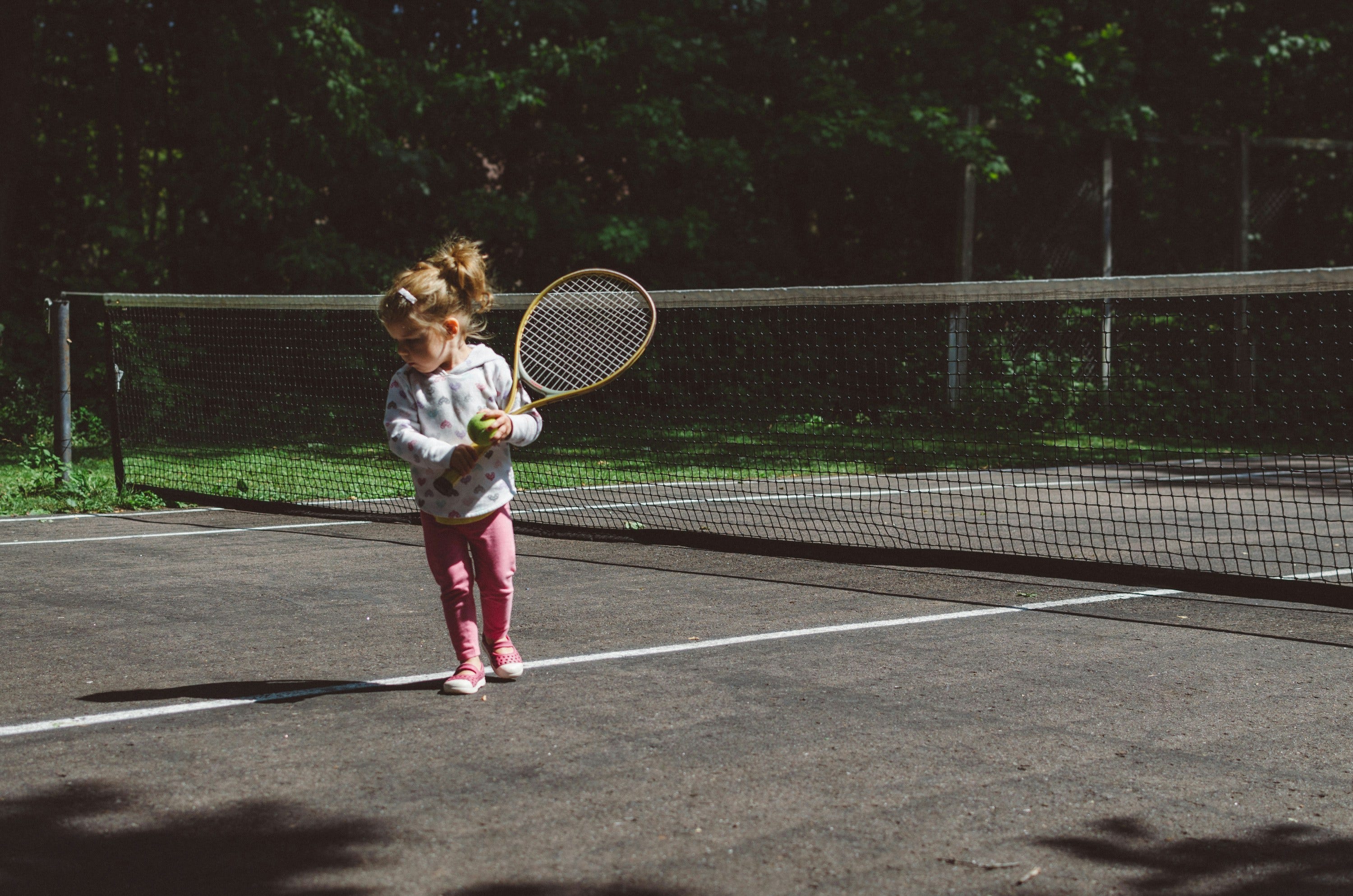
We all know parents who go too far. Who helicopter, treat their kid like a fragile piece of china, and try to bulldoze the path, removing every obstacle. Nothing you do is going to make your kid a prodigy, but you can do a lot to mess it up.
Nobody tries to thwart their child’s development intentionally. What every single parent has in common is that they want the best for their kids. But when you enter what is perceived as a hyper-competitive market—in school, in sports, in music and other extracurriculars—even the best of us can unintentionally act against our child’s long-term interest. Things can spiral fast.
Over the last few years, as a part of researching and reporting for my new book, The Way of Excellence, I made a point to always ask the world’s best athletes, musicians, chefs, scientists, artists, and other high-performers about their childhoods. I also carved out time to speak with some of the world’s best psychologists and coaches on the topic too. Obviously this was for the book, but it was in no small part for myself too. I’ve got two young kids. I coach youth sports. I am just as failable as the next parent, and want to get things right as best I can.
Here are a set of guiding principles I came out with:
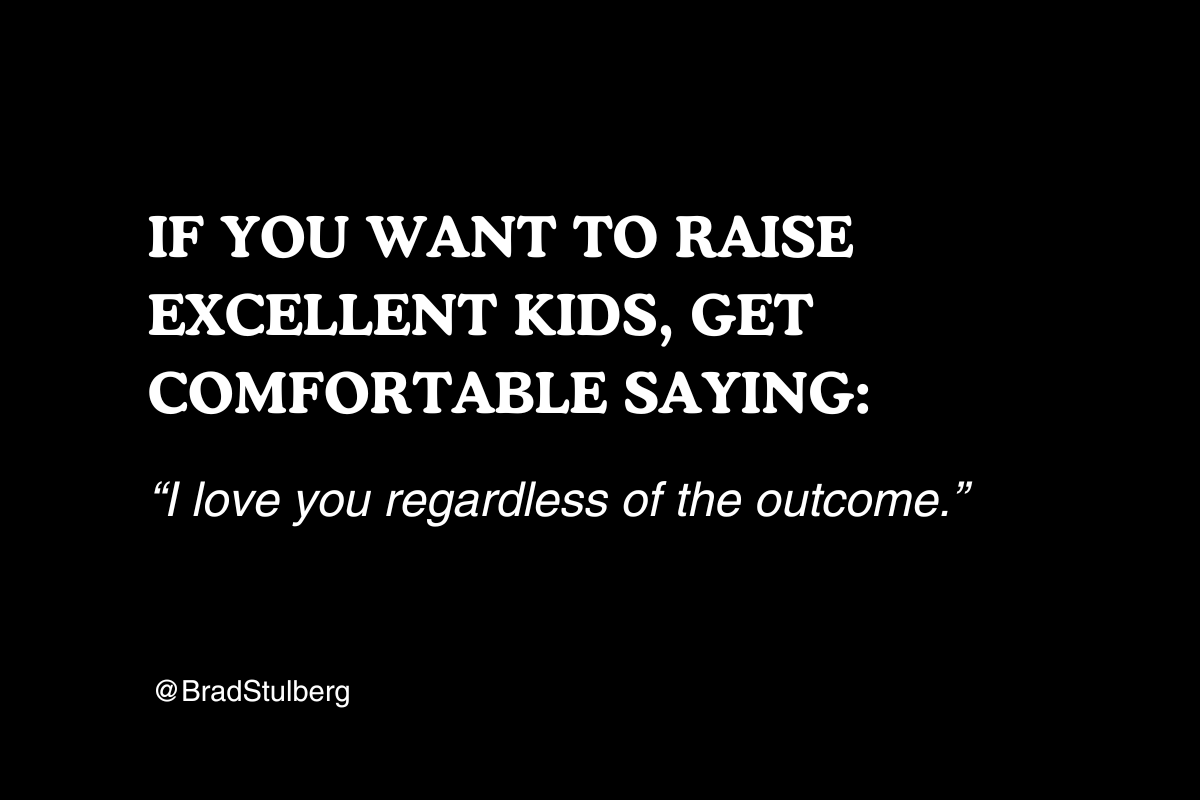
Your kids need to know that your love and approval is not contingent on them performing a specific way. Study after study shows that young people improve most when they know they are loved deeply and accepted regardless of the result.
You can’t just say it.
You’ve got to show it, which means keeping your shit together when things don’t go well. You’re the adult. Act like one.
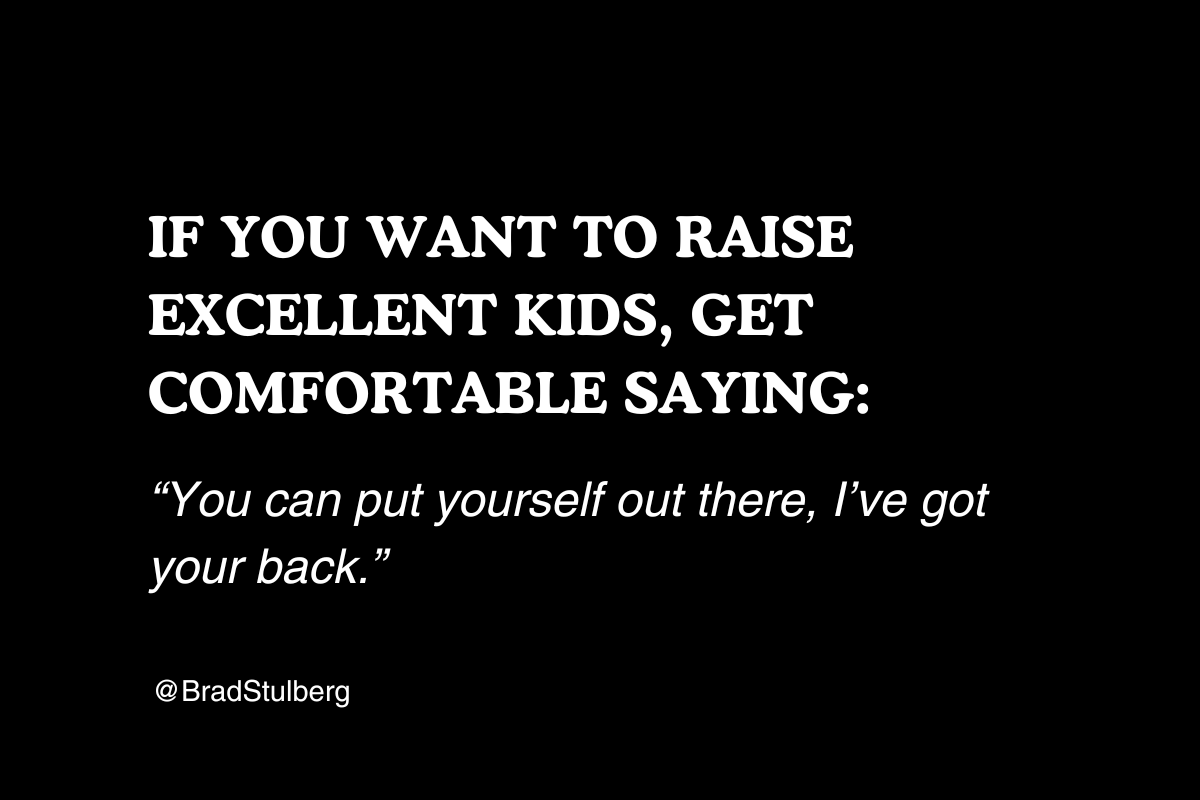
As young people are developing their own unique identities, self-confidence and self-trust can be a challenge. Your job as the parent is be a backstop of belief, which, paradoxically, will help them establish their own.
You should encourage your kids to step into the arena. And you should have their back when they do.
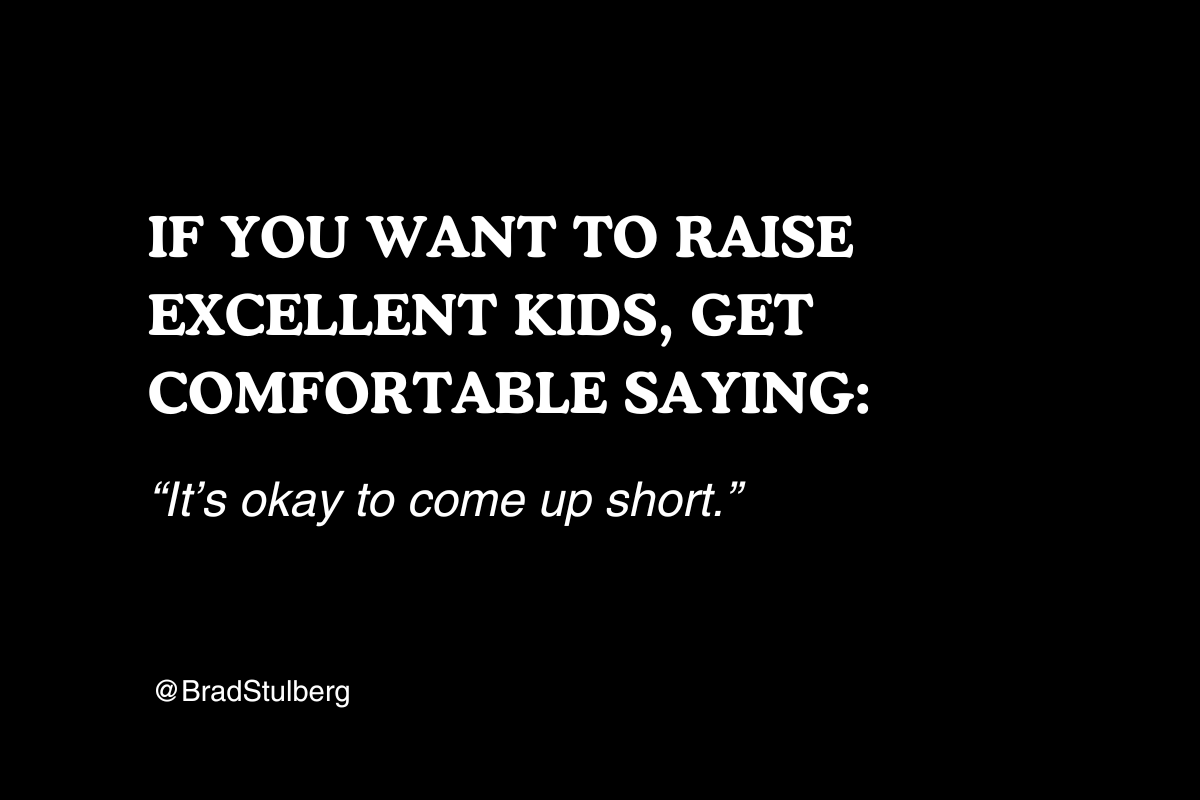
Kids need to know it’s not a catastrophe if they fail, lest they’ll become scared to try (more on this in a moment). You want your kids to be curious and to explore many interests, so they can find what is the best fit for their temperament and unique gifts. Failure is an inevitable part of this process.
When your kid fails, you don’t want to brush it off to fast—even if it’s not a big deal, it can feel like a big deal to them. But you also don’t want to dwell on it.
Honor your child’s feelings, but also give them perspective.
Consider implementing the 48-hour rule: give them 48 hours to grieve defeats or celebrate victories, then nudge them to get back to doing the activity itself.
We live in an epidemic of nonchalance. The reason people don’t try hard is because trying hard requires putting yourself out there. It’s scary enough for adults. Now imagine being a kid in today’s world.
Remind your child that trying hard and giving a damn is so much cooler than never trying at all, regardless of what the popular kids do.
Again, while you can do this verbally, actions speak louder than words. Do what you can yourself to try hard and put yourself out there. Let your kid see you caring deeply about things and taking big shots. When you succeed, you can role-model how to take the win graciously and humbly. And same for the loss when you fail.
Praising effort not result is the crux of developing a growth mindset.
Results are often contingent on many things outside of one’s control. They will ebb and flow. Effort is within our control. It’s also a requirement to improve and find satisfaction and fulfillment—regardless of how naturally talented you are.
It’s wild how naturally we say I’m so proud of that shot you made or You did such a great job at the recital. Do what you can to shift the talk-track to I’m so proud of how hard you played out there, how you chased down every loose ball or All that practice really paid off at the recital today—you were great!
The main determiner of whether kids continue in a given activity is whether or not they’re having fun. Full stop.
But what about all the uber-serious parents on the sidelines? Research shows that 70% of kids quit youth sports by age 13. The number one reason they give: it’s not enjoyable.
Chill out. Kids need to play. And have fun.
Your number one job is to love and support your kid—not their performance, but their being. Nothing you do at age 9 or 10 is going to make your kid a Division I athlete or conservatory scholarship student. But you can help them build a good relationship with themselves and the activities they love—and that can last a lifetime.
It starts and ends with your love and support.
At every practice. At every recital. After every report card. Never forget this.
P.s., my new book, The Way of Excellence, is available for pre-order. Think of it as a gift to your future self, and you get great bonuses today. Details here.
My own kids are grown; however, I am still coaching, and these are great guiding statements for coaches as well. And I will share it with the parents of the athletes I coach. Thanks.
Oh, Brad, I counted only seven guiding principles.
These are also good things to say to ourselves as adults. Kids can tell whether we enjoy the process and accept ourselves or beat ourselves up for every mistake. As a teacher, I see parents who are sure they aren’t putting too pressure on their kids, but those same parents put so much pressure on THEMSELVES that the kids adopt the same attitudes.