


We’ve recently seen leaders refuse to take accountability for clear mistakes.
It’s a red flag for fragility.
If someone acts like they have everything figured out and never admits mistakes, that’s usually a sign to run in the other direction. Studies show that when you’re secure in yourself and your skills, you can admit when you’re wrong. You own your mistakes, learn from them, and get better.
But when you’re insecure, every mistake becomes a threat to the illusion you’re trying to maintain. So you do whatever it takes not to acknowledge them. Researchers developed the “PRISN” acronym to illustrate this: Performative Refinement to soothe Insecurities about SophisticatioN
Performative refinement and denial might ease the discomfort in the short-term. But eventually it blows up on you.
This concept isn’t abstract, it’s practical:
No one wants a boss who throws them under the bus. No one wants a spouse who never says sorry. No one wants to raise a kid who can’t grow from failure. No one becomes great without owning their mistakes and learning from them along the way.
Being a human is hard. Even the smoothest path to progress is lined with ditches and missteps. Failure hurts. Mistakes sting. We all have egos. Genuine confidence isn’t about being bulletproof. It’s about shedding the addiction to perfection and letting go of always needing to be right.
There is a big difference between operating out of a place of fear to protect a fragile ego versus admitting when you’re wrong, doing the right thing, and getting back on track. Once you see this difference, you can’t unsee it–and you start noticing it everywhere.
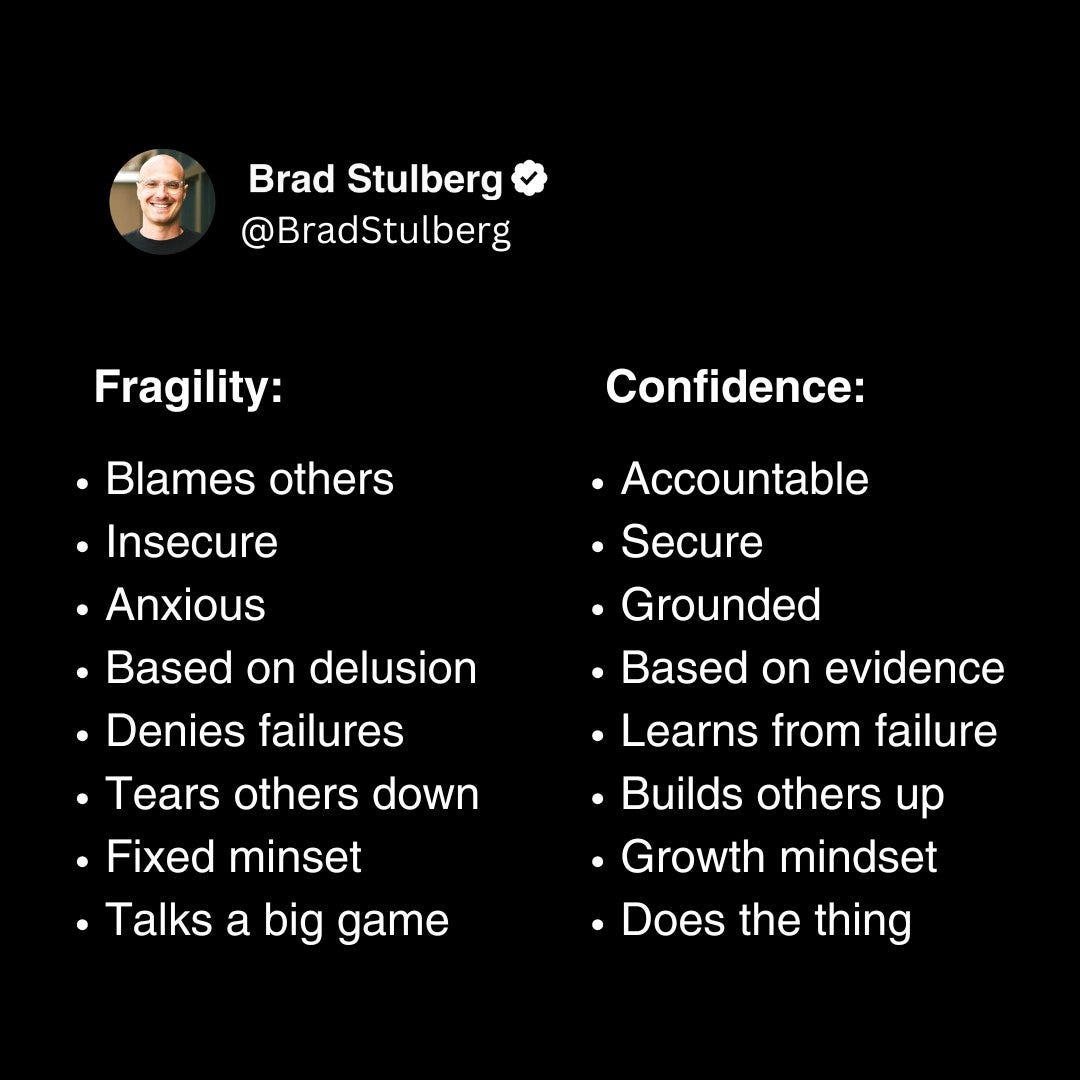
This isn’t about dunking on politicians and leaders who aren’t owning their mistakes (though some definitely deserve it). The point is that we don’t have to accept this kind of behavior as normal or as a way to behave in order to be seen as strong.
We can—and should—hold ourselves to a higher standard.
No one is perfect. But if we throw out values like honesty and accountability, we have to ask ourselves: what are we actually doing here?
In an era of performative everything and far too many weak examples, we desperately need role models who take accountability, learn from failure, and do the right thing.
True strength isn’t about never being wrong. It’s being secure enough to say: “I messed up. Here’s what I’m doing to fix it.” It’s how you learn and grow. It’s a sign of genuine competence and confidence, something the world is in dire need of.
It’s simple, but that doesn’t make it easy.