

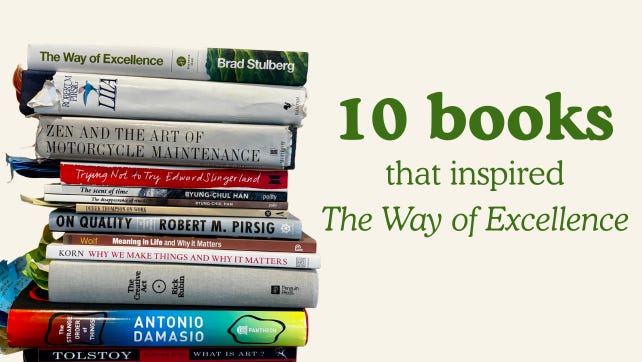
In case you haven’t heard the news, I’ve got a new book!
It’s called The Way of Excellence. I don’t mean to hard sell you and I hope this doesn’t come off as presumptuous but I think you are going to love it!
It’s a big swing at excellence—not the hustle-culture, pseudo greatness variety, but the real thing. It includes examples from diverse crafts including sport, science, coaching, the creative arts, knowledge work, and more. It argues that we need to reclaim excellence, as a personal and cultural aspiration.
If you think you may get the book when it comes out it’d mean the world to me if you consider pre-ordering now. Pre-orders go a long way to help the book’s launch, and to be frank, they make my publisher happy and more willing to do a big print run!
I am also giving away some great bonuses if you pre-order now, including a 90-minute masterclass, interactive workbook, pillars of excellence, and more. This book is my best work yet. A pre-order is the best way to support my work, and to make an investment in your future self.
1) Pre-order from Amazon, Bookshop.org, or Barnes and Noble.
2) Fill out this form with your order number to receive your bonuses today.
One of the bonuses is a reading list of my favorite books on mastery and excellence. Since you come here as a lover of reading and books, I am sharing it below, whether you get the new book or not!
The Way of Excellence Reading List
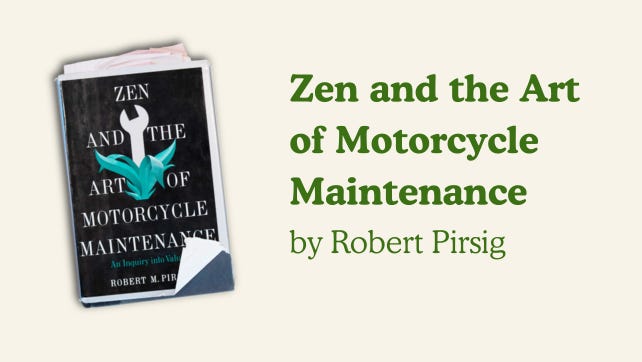
This is my favorite book ever written. It introduces the idea of “quality,” which Pirsig defines as the special resonance that occurs when an actor and his or her act become one. If any single book inspired The Way of Excellence, it’s this. Zen and the Art of Motorcycle Maintenance is referenced multiple times, including in the chapters on the philosophy of excellence, goals, and gumption.
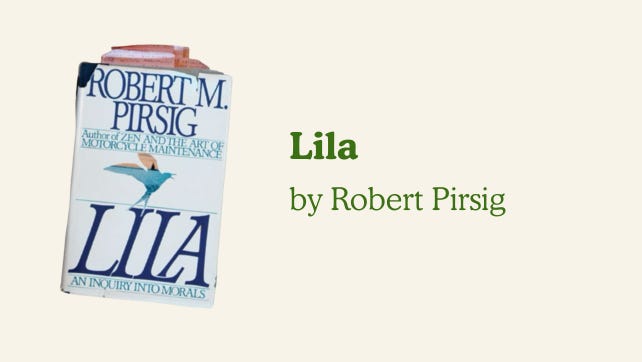
The sequel to Zen and the Art of Motorcycle Maintenance. Here, Pirsig delves deeper into the notion of Quality and how it drives personal and cultural progress. Lila is referenced in the chapter on the philosophy of excellence and is directly quoted in the section on happiness in the chapter on the psychology of excellence. If you liked Zen and the Art of Motorcycle Maintenance, then I highly recommend you read this next. I’ve read Pirsig’s books back-to-back on multiple occasions, and each time I’ve gotten something new out of the experience.
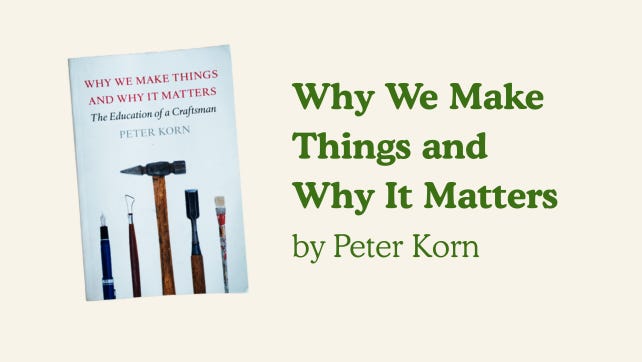
This was my favorite written source for understanding the mindset of a craftsperson—not metaphorically, but literally, as Korn is a lifelong woodworker. What Korn describes elegantly throughout his book is a theme that appears again and again in The Way of Excellence: the projects that you work on, and the way in which you work on them, also work on you. Korn is quoted a few times in the book. My favorite comes in the chapter on the psychology of excellence, where he talks about how the qualities he thought he wanted in his tables turned out to be the qualities he wanted in himself.
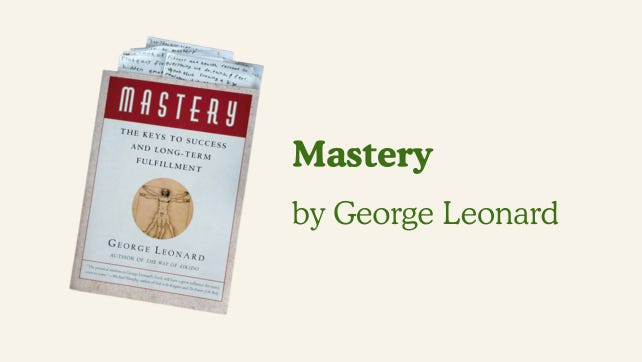
A brief read on the pursuit of mastery, from one of my favorite humanistic thinkers of the late 1900s. Leonard is quoted a few times in The Way of Excellence; my favorite appears in the chapter on routines, where Leonard likens settling into a routine to settling into a well-worn easy chair. It’s a must-read book on developing a mindset for mastery.
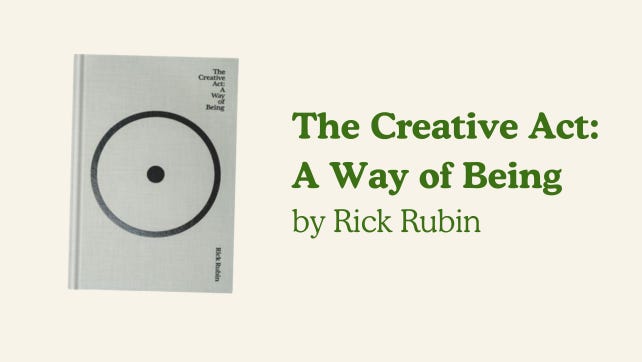
This book was first published as I was working on the first draft of The Way of Excellence. Rubin is perhaps the best (and most enigmatic) music producer alive, and The Creative Act is full of wisdom from his work. Rubin talks about creativity in somewhat mystical terms—what I found utterly fascinating (and perhaps you will too) is that those mystical terms have striking parallels to the objective theory of excellence I sought to define in The Way of Excellence. What Rubin calls the “ecstatic” mirrors what biologists call “homeostatic upregulation”—and as you’ll read in chapter one, it underlies why excellence feels so good.
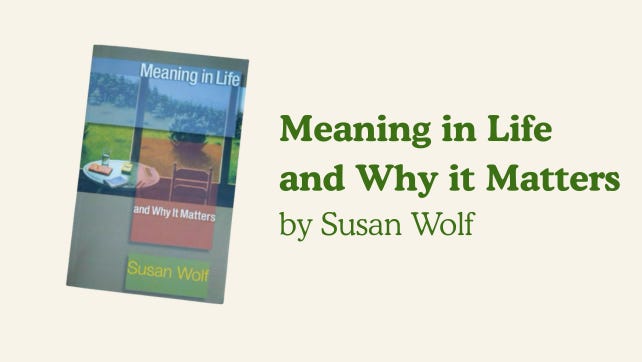
Wolf is one of my favorite contemporary philosophers. She studies and writes about meaning, and this book is her masterpiece. It’s a supremely rational construction of what meaning is and how to manifest it. Wolf is quoted in the chapter on the philosophy of excellence, where she uses similar terms as Pirsig to define meaningfulness, which she says arises from the intersection of subjective attraction and objective attractiveness.
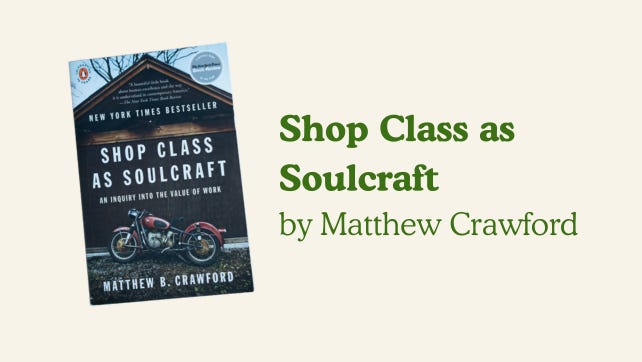
An ode to the satisfaction that comes from developing competence; a topic that Crawford is quoted on in chapter three of The Way of Excellence. This book details how Crawford left a prestigious academic job to focus on working as a mechanic, and how he found more fulfillment in life after making that transition.

Though this book is not directly quoted in The Way of Excellence, it is one of the best I’ve read on peak performance in sport, and how peak performance in sport isn’t so different from peak performance in life. Gallwey wrote The Inner Game in 1974, and it’s still widely read by professional athletes across all sports. It belongs in the library of everyone interested in the mental side of attaining one’s potential. It was never far from my mind while working on The Way of Excellence, perhaps especially for the chapters on goals and joy.
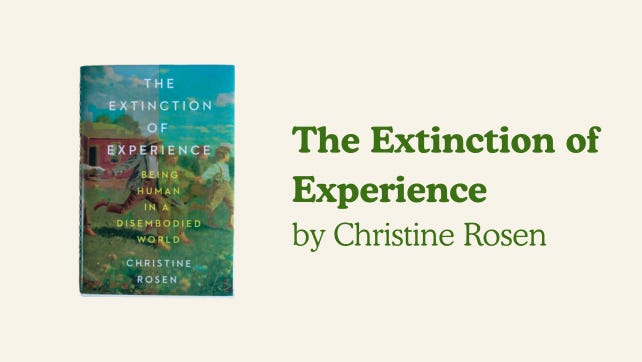
This book explains how technologies are increasingly coming between humans and direct experience in nearly all domains of life. It argues that this sort of incessant alienation is grading on the human psyche and soul. A similar theme comes up repeatedly in The Way of Excellence. It was while engaging with Rosen’s work that I first thought of the phrase “excellence requires intimacy.” It also helped to reassure that I was on the right track in framing excellence as an antidote to so many of the problems Rosen writes about.
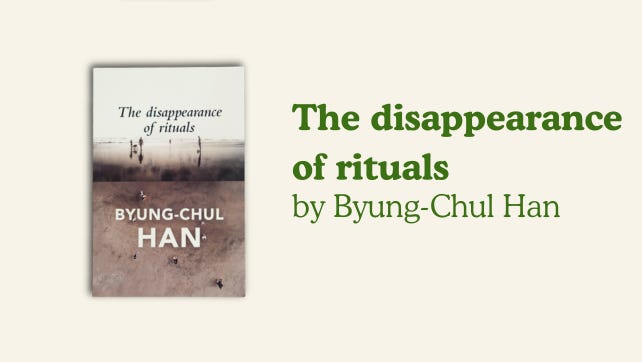
I think Han’s writing on rituals is the best, bar none. His work helped me to see how rituals are so important to constructing meaning in our lives, preventing us from floating along freely from one thing to the next and feeling unmoored. Rituals, Han writes, imbue our lives with gravity. If not for Han’s work, I’m not so sure I would have been convinced that “completion” needed its own chapter. But Han’s work convinced me, and I’m glad it did.
I hope you found the reading list valuable, and found a book or two in here that you may want to pick up that can tide you over until The Way of Excellence comes out!
Appreciate you!
Keep reading.
Thanks. An out of the box book list. Always admired craftsman. Japanese ethics, arts, are unbeatable.
Thanks. I preordered your book and found room for it. I’ve read about half the books on your list, but now I have to find room for 5 more books. Excellent recommendations