

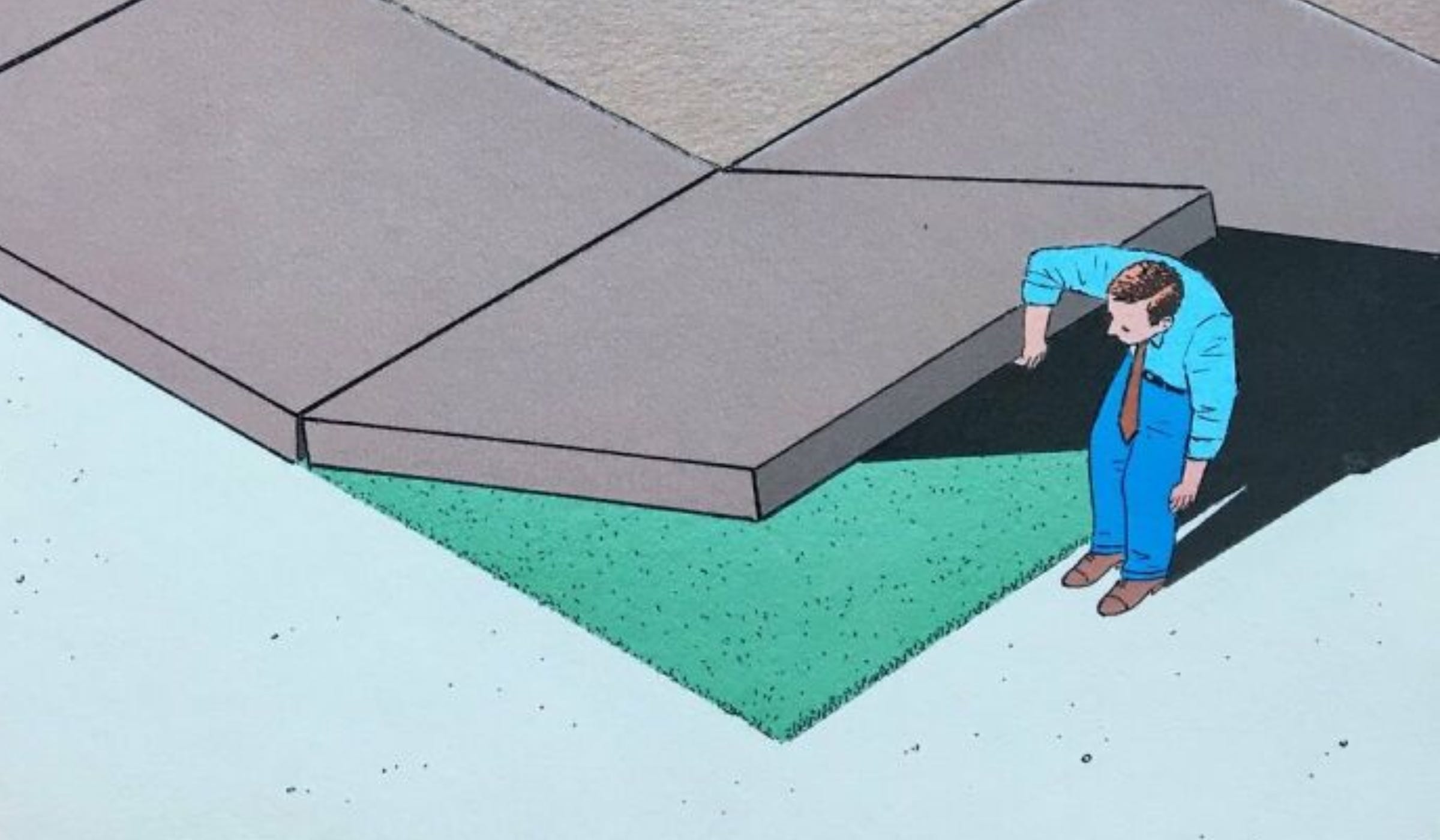
The enhanced, optimized self has fully arrived. We have metrics for everything: sleep scores, heart rate variability, glucose, recovery, and readiness. We track not only our biomarkers but also our social and professional markers: subscribers, followers, shares, views, likes. Investors compare deals on PitchBook. Athletes compare run paces on Strava. Authors compare sales ranks on Amazon. Everything is quantified in real time. Everything revolves around the self—and how it stacks up.
Our inclination to track and compare is nothing new. Uncertainty is uncomfortable. Metrics give us a sense of control over things like our health, however illusory that control may be. We’re also the most social creatures in the planet’s history. We crave benchmarks and reference points. We exist as individuals—and derive meaning in our lives—only in relation to others.
What is new, however, is the all-encompassing, technologically enabled, 24-7 nature of everything we track.
Until recently, you received health metrics once a year at your annual physical. You understood your social circle based on the number of people who showed up at weddings, birthdays, and holiday parties. Professional success was measured on yearly lists. Athletes knew where they ranked based on a few events they peaked for every season. We still measured and compared, but there were long stretches of time between those measurements and comparisons. And in those long stretches of time, we could forget about ourselves and how we stacked up. That is no longer the case.
To be fair, people must believe there is at least some utility to all this tracking; otherwise they wouldn’t do it. For instance, when it comes to biomarkers, people often claim you catch maladies that might go unnoticed between annual physicals. While this can be the case, it’s also true that biometric tracking generates false positives and plenty of noise, leading to anxiety and even medical errors. Research indicates that, for many, monitoring one’s sleep can worsen sleep quality and quantity, due to the stress of tracking. Scientists call this orthosomnia, the ongoing quest for perfect sleep metrics that produces the very insomnia it’s meant to prevent. While people are finally beginning to consider the unintended consequences of optimization on our bodies, the broader and more serious cost, as we’ll see, is to our psyches and souls.
How The Self Gets in The Way
In 1990, the psychologist Mihaly Csikszentmihalyi published the book Flow. In it, he describes experiences when we fully enter the zone and become immersed in what we are doing. You can enter a flow state in almost anything; common examples include playing sports, writing, creativity, conversation, making art, and sex. When you are in a flow state, the distance between you and your activity shrinks until you become one. You lose yourself in the moment. It’s an incredible feeling.
The initial question behind Csikszentmihalyi’s research was simple: What makes a life worth living? Across the tens of thousands of people he studied, the experience of flow was the top response. Csikszentmihalyi’s findings align with those of another giant in psychology, Abraham Maslow. Maslow used the term peak experience to capture transcendent moments of joy, awe, and deep fulfillment. He viewed these as profound states of optimal psychological health, “characterized by feelings of integration, egolessness, and deep connection to what you are doing.”
A hallmark of flow and peak experiences is that you transcend your ego—and all the self-evaluation, judgement, and thinking that comes with it—and become one with your activity. The inverse is also true: studies show that an excessive focus on the self is associated with choking, be it on the playing field, in the boardroom, or in the bedroom. Look more broadly across all of life, and research shows excessive self-focus is linked to unhappiness, anxiety, and depression.
Herein lies the great paradox of the enhanced, optimized self: it makes us less optimal people. We spend all of this time focusing on ourselves, and yet the states we long for—those that give rise to our greatest contributions and the experiences that make life worth living—all require the opposite. Our best performances (let alone our best lives) occur when we relax our grip on the self. Meanwhile, modern technologies and an obsession with optimization have tightened that grip more than ever.
Transcendence
Even the most extreme self-enhancer of all, longevity influencer Bryan Johnson, reports being most alive when he is taking massive doses of psychedelics or making love to his girlfriend. What both of these experiences have in common is that they obliterate the self he is otherwise so utterly focused on.
“I feel a lot more love, a lot more compassion immediately. Everything’s alive,” Johnson said 30 minutes into a Mushroom trip.
“We merge. Our brain signals collapse into synchrony, phase-locking. No longer are we distinct neural patterns, but one shared waveform,” Johnson writes of sex. “Rhythmic motion now resolves as music. Beads of sweat surface as we sway in concordance. Want washes over us, commanding all. Our egos are quiet as the frontal cortex dims; future, past, and death evaporate. Now is all that exists.”
Johnson is an extreme example (at root he’s a performance artist), but the tendency to get captured by metrics and optimization is very real and it affects us all, myself included. When I obsess over my Amazon sales rank, my writing deteriorates. When I wear a smartwatch, my athletic performance declines. When I obsessively track my steps, I lose the joy of taking them.
The center of attention in one’s life should not be on attaining certain metrics that supposedly represent self-optimization. Rather, it should be on losing oneself in meaningful projects, relationships, and pursuits. The latter is only attainable if you stop obsessing over the former.
Loosening our grip on self-optimization comes with not only individual benefits, but also collective ones. At present, we are morphing into a society of narcissists, atrophying the ability to experience community and belonging. This trend is harmful to big things like democracy and civil society, but it begins by unfolding in the smallest of ways. For example, if everyone in the gym is focused on their watches, rings, and phones (and ruminating on whatever numbers are appearing on them), then what used to be a communal space filled with friendly interactions becomes a warehouse where we are alone together. It’s not good for anyone.
Stop Optimizing, Start Living
Sometimes I feel a mix of insecurity and existential anxiety. Are my books selling enough copies? Am I gaining followers? Did my deadlift lockout look okay? I relieve the anxiety by checking real-time metrics in each of these categories, but I rarely do anything differently as a result—certainly not on the seventh check that day. If anything, what I’m actually doing is stressing myself out and distracting myself from what is in front of me. If the numbers are good, I feel better, but only for a bit. If the numbers are bad, I feel worse. The dashboards and analysis may have a sheen of optimization, but nothing about this pattern is optimal. It’s like gambling on an existential slot machine.
My traps revolve around performance metrics in my two primary crafts: writing and training. For others, it’s health. But the solutions are the same. Either ditch the trackers altogether or design systems where you check them less frequently.
Throw away the ring or wrist-worn device (better yet, replace it with an analog watch that has a design you admire, one that pulls you into beauty and craft instead of away from it). Sign out of the real-time rankings portal. If you want to analyze the lift, film it monthly instead of daily. For each metric you track, ask yourself what benefits you are deriving and at what costs. Be brutally honest, and purge relentlessly. At first, these changes may lead to an increase in anxiety, but after a week or two, I almost guarantee you’ll feel better, and perform better too.
Being healthy, high-performing, and living a generally good life requires education and information, no doubt. But eventually, it’s wise to cut back on all the tracking and analyzing and be fully in the moment instead. Which is to say, stop optimizing and start living.
Amen, 2027 we will see the rise of the anti-optimized self. A pushback to metrics-centric optimization perfectionism culture and a return to a more balanced life. 🤞
I think you make good points but I also believe you and others miss common reasons many people seek to optimize. Optimize may be the wrong word but I can’t think of another off the cuff. For some people who live under the pressure of life, work, family, etc. they need to maximize the effectiveness of the time spent training.
The other case, my case, I’m old as hell and I want to train well. It’s too easy to over train and risk injury and delayed recovery. So I need to understand how my aging body is responding. If I listened to the state of my joints, or my fatigue, I’d stay in bed all day. So if HRV or some other system can help, I need it.
I can appreciate your point about data saturation, but rather than rail against data overload, give us some wisdom on how to make our training more effective and useful for whatever our goals are, especially for those of us who were never uber athletes, us who want to continue to climb mountains, XC ski, backpack, to avoid being a burden.