

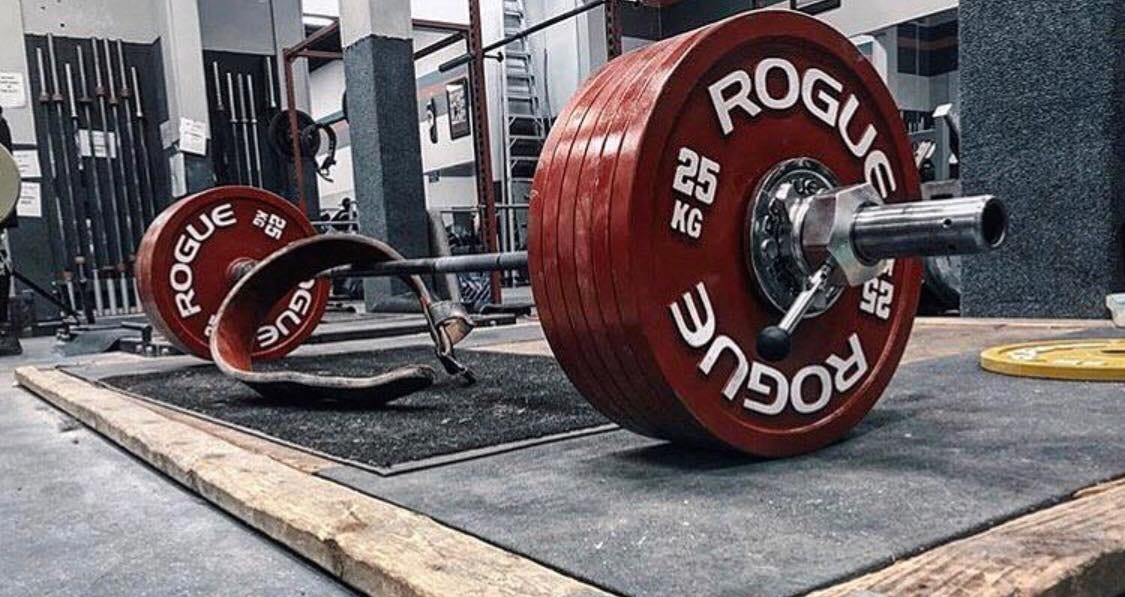
Ten weeks ago, I was struggling mightily in the weight room.
After a powerlifting meet in the Spring, I had taken three months away from heavy deadlifting. The break wasn’t because I was hurt, but because I want to play the long game, and occasional time off from the big lifts is smart.
When I first got back into it, I felt awful.
Three hundred and sixty-five pounds, a weight that normally moves lightning fast and feels light, felt heavy as can be.
After three weeks, I turned to my coach and said, “This feels like walking on an open blister. I can’t believe how terrible and uncomfortable it is. Maybe I’m just done deadlifting.”
My coach chuckled and told me it’s par for the course.
“But it was only a three-month break. I was training hard, just not deadlifting,” I said.
“Practice what you preach,” he replied. “Stay patient. Trust the process. Give me a few more weeks.”
Ten weeks later, I hit 500 pounds for two reps with more in the tank—a lifetime PR. Then just three weeks after that, I hit 530 for a single, another PR.
I went from questioning what I was doing to feeling strong, full of energy, and performing at my best. All of this in just 70 days.
The Problem with “One Percent Better Every Day”
My recent experience in the gym is a prime example of something I write about frequently: progress is nonlinear. It’s why the advice to get “just one percent better every day” works great, until it gets in the way.
A more accurate description of progress looks something like this: When you are brand new to an activity, you might get 100 percent better every day. As your skill level increases, the gains will become more incremental—ten percent, five percent, one percent, half a percent, a quarter of a percent, and so on. Eventually, the gains will be so small you can’t even observe them. At this point, you might find yourself on a plateau for a few days, weeks, maybe even months. And then suddenly, you breakthrough.
The implication of this truth is both simple and significant: If you are addicted to visible progress you will not last very long in whatever pursuit you do. This is a big reason so many people give up or burnout after the honeymoon phase of trying something new.
But so much of the good, interesting, and most fulfilling stuff comes after the honeymoon period. You’ve got to stay patient and find value and satisfaction in the work itself even, and perhaps especially, when you aren’t making observable progress—even when it feels like you are walking on an open blister.
It’s not just strength training.
It’s writing. It’s music. It’s leadership. It’s running. It’s just about any worthwhile pursuit. One of the biggest traps is the plateau or valley. But much like I recently experienced, oftentimes, the plateau or valley precedes a breakthrough. It’s just how it goes once you get pretty good at something.
Add in time off, injury, illness, family obligations, travel, and all the other stuff of life, and for all that we know about human performance, it becomes harder to predict and more of a mystery.
Staying on the Path During Inevitable Plateaus
Process over outcomes. Patience. Persistence. Consistency.
I research, coach, and write on these topics. I’ve also been fortunate to work with many of the world’s best performers on them. And yet, when it’s me needing to be patient, when it’s me experiencing a plateau or valley, it’s still really dang hard.
I probably wasn’t ever going to quit deadlifting. But having a coach to remind me that this is just how it goes certainly didn’t hurt. When you’re on a long plateau, the devil on your shoulder tries to convince you that maybe you should consider throwing in the towel. You need a counterbalance. It’s one of the reasons I write this substack. It may not be filled with the latest fad or protocol that promises a quick fix, but it does contain nudges and reminders to help keep you (and me!) on the path.
Because at the end of the day, the goal is the path and the path is the goal, and so much of success is simply a matter of staying on it.
The more skilled you get at a given pursuit the more important it becomes to release from attachment to acute progress. It also becomes increasingly important to find fulfillment and satisfaction in the work itself, and the community in which you do it. That’s the stuff that will keep you coming back for more over the long haul, providing nourishment and motivation to show up when you are stuck, and also providing gravity to keep you grounded when you succeed.
Excellence, performance, and greatness can be quite simple, but simple does not mean easy. It’s vital to surround yourself with people, writing, and other material that consistently reminds you to fall in love with the process—to stay patient, to stay focused, to stay consistent, to stay hungry.
Do that, and eventually the process loves you back.
Everything about this message is lovely. This part is especially resonant with my own journey:
"...the more important it becomes to release from attachment to acute progress. It also becomes increasingly important to find fulfillment and satisfaction in the work itself, and the community in which you do it."
I work as resilience coach with prek-12 educational communities. I was asked "How do you do this everyday and not burn out?" I heard myself say, "The work is is own reward. "
Thanks for writing and posting here.
I see the "1% better every day" idea better from 30,000 ft, as they say. Steady progress in the big picture. It allows you to ignore big jumps, slight dips, the plateaus.