

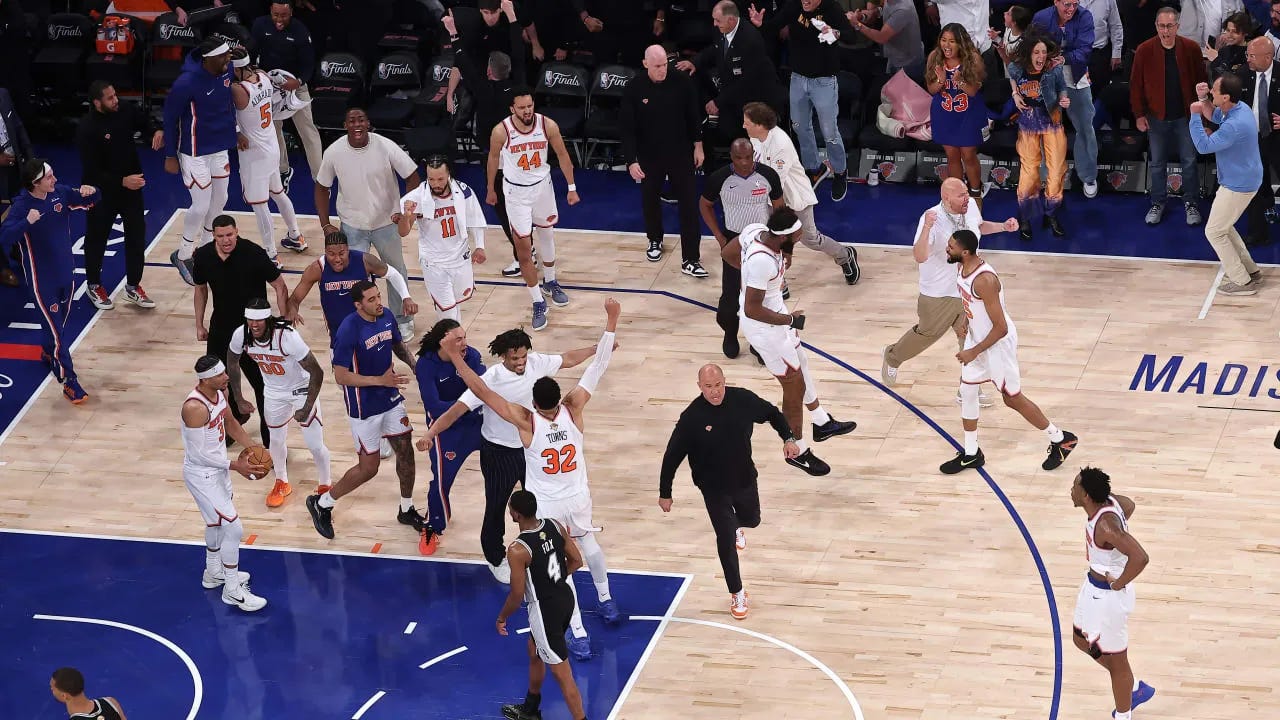
The New York Knicks trailed the San Antonio Spurs by 27 points at halftime of Game 4 in the NBA Finals. The team, the crowd—perhaps every fan in the country—were shocked. The Knicks came out flat in one of the biggest games in franchise history. It didn’t help that they received questionable calls from the refs, or that the Spurs could not miss. The result: 76 to 49. A total blowout. No team has ever come back from such a deficit in NBA Finals history.
The Knicks had every reason to quit. They could have gone back to San Antonio with the series tied 2-2 and regrouped. But they simply refused. There were 24 minutes of basketball left to be played. And the Knicks never stopped playing.
At halftime, the team didn’t watch film. They realized as a group they could still compete, and perhaps the tides would turn.
As The Athletic reported, 25-year-old guard Miles McBride replayed the first half in his mind and realized that if you take out the wildly unlucky bounces, the Knicks only would have been down 14 points. “Fourteen,” he thought. “That is doable.
And so the Knicks committed to the game. And to each other.
Now you don’t erase a historic gap at once. That’s overwhelming and impossible. You need to chip away, possession by possession. The bigger the goal, the smaller the steps.
“You look at it when you’re down 29 as ‘OK, let’s get it to 20.’ There are three minutes left in the third quarter. We’re down 18, and you’re thinking, ‘Let’s get it to 10.’ In the fourth quarter, you’re like, this is winning time. Anything can happen,” Knicks wing Josh Hart said.
The Knicks chipped away. They closed the gap to 15 at the end of the third quarter. With 6 minutes left, Karl-Anthony Towns hit a desperation three-pointer, his first points in any fourth quarter of the series, to cut it to 9. With seconds remaining, the Knicks trailed 105 to 106. Jalen Brunson missed a 30-footer. OG Anunoby flew in from the weak side to tip it home with 1.2 seconds left to send New York to a 3-1 series lead and to the brink of their first championship since 1973.
Watching it was like nothing I'd seen before. Stunning. Electric. My jaw is still dropped.
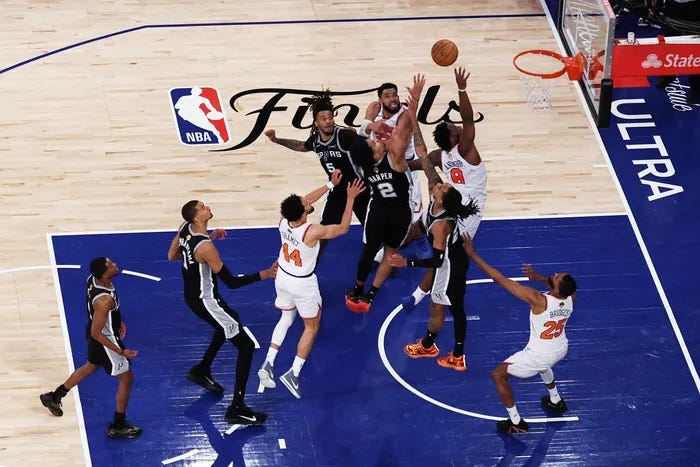
“We’re a resilient group. We’ve been through a lot,” Anunoby said. “We’ve come back plenty of times when we’re behind. Just staying with it, weathering the storm, not being too down or angry or frustrated.”
An NBA playoff run is many things, but perhaps most of all, it’s a massive test of emotional regulation. You prepare. You practice. You visualize. And then stuff happens. The difference between those who collapse and those who rise is how they respond, especially when things don’t go their way. Here, what is true in basketball is true in life.
It’s easy when things are going your way. But then stuff happens. You’ll fall behind. You’ll catch bad breaks, bad calls, bad bounces. Most people check out when the odds are against them. But if you keep showing up, if you stay in the fight and stick to your process, you never know what can happen.
The Knicks never stopped playing hard. Not when they were down 29. Not when they were down 1. It’s an extraordinary testament to the team, and to the human spirit.
In my new book, The Way of Excellence, I write about having a next play mentality: You can’t control what already happened. You can’t control the score. You can only control the next play. One stop at a time. One bucket at a time. One possession at a time. You show up and apply effort. Again. And again. And again. It’s how you erase a historic deficit in the NBA Finals. It’s also how you work through the biggest challenges in life.
“You’ve got to have some natural luck and some where you’re going to make your own luck, and that was probably the biggest message,” explained Knicks Coach Mike Brown following the game.
Sport is full of luck. (Life, too.) Sometimes it’s good. Other times it’s bad. By definition, you can’t control luck. But you can increase your surface area to get lucky. The only way to do this is by showing up and staying in the game, even, and perhaps especially, when you don’t really want to.
People often mistake excellence for control or perfection. But this couldn’t be further from the truth. Excellence is messy because excellence is human. That’s also what makes it beautiful. It means caring deeply. It means refusing to quit on yourself when the situation looks hopeless. It means sticking with your process, even when nothing is falling. It means playing the game in front of you—not the game you wanted; not the game you hoped for; but the game that is happening right now. Because never know what can happen.
As the Knicks just showed us, sometimes it’s even magical.
Gotta admit, just shortly after I picked up my jaw at that finish I thought: looking forward to Brad’s take on this. Wembanyana’s trash talking and bs treatment from the refs made it extra sweet to see NY take the W.
I thought at half time this is probably over but “next play mentality” could overcome. Didn’t believe it would happen… but wow!