

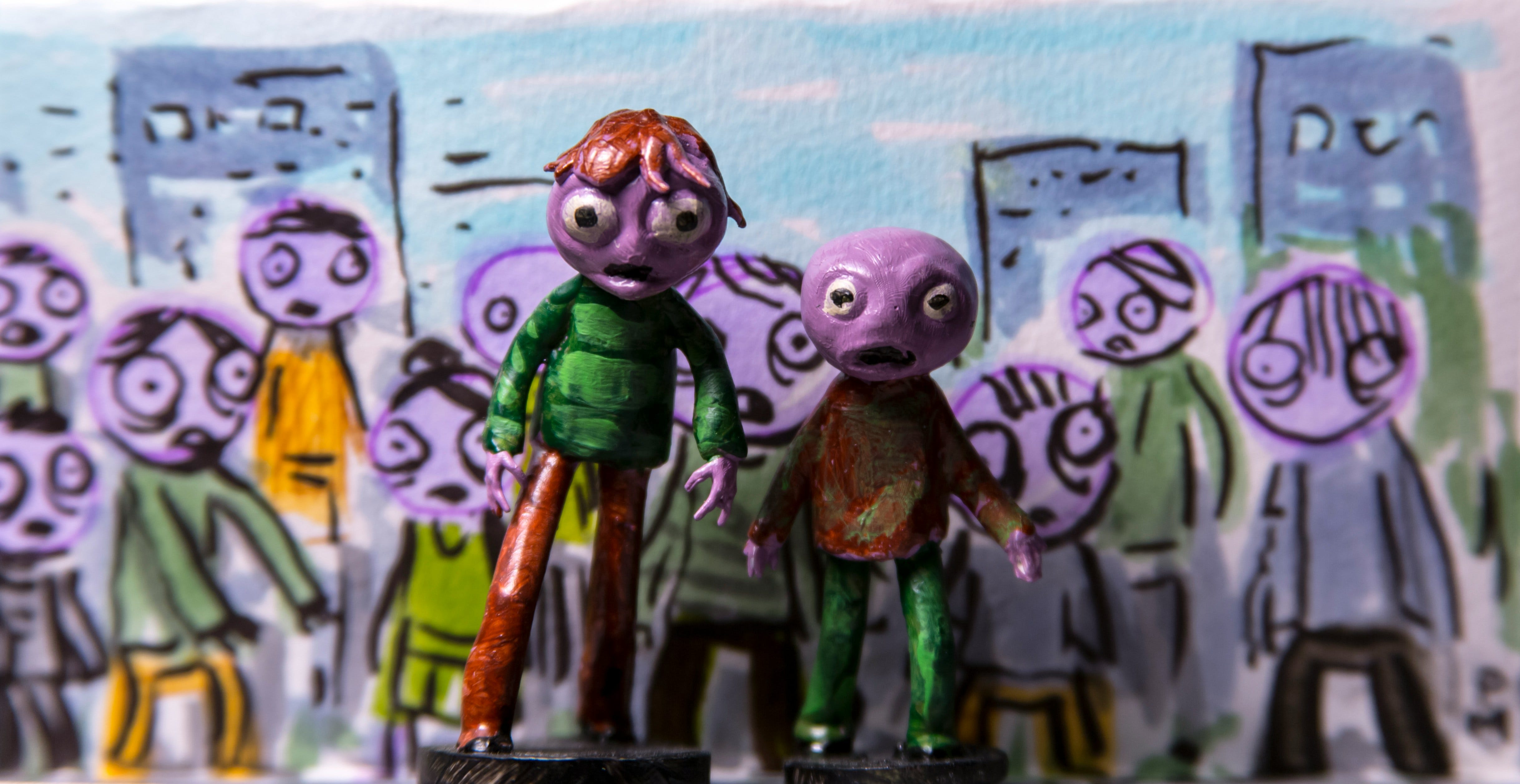
It's time for a new term: zombie burnout.
It represents the half-dead, half-alive shuffling through the day that leaves you both restless and exhausted at the same time.
Every minute is filled with content, noise, and distraction. We do anything not to be alone in our minds, anything to fill the void. Scroll. Always have a podcast on. Check and re-check our devices. It’s why we feel tired and antsy at the same time. We are overstimulated but undernourished.
People thrive when they are taking on meaningful challenges, engaging in activities that make them feel alive, and being present with others. This is a far cry from the synthetic stream of content and experiences we pulverize ourselves with every day.
Two Types of Burnout
Yes, you can burn out from working too much. But you can also burn out from not doing enough of what lights you up.
Data from the Gallup Polling Group show that over 75 percent of people feel burnout at some point during the year, and only 32 percent are highly engaged in their work and life. These numbers are essentially unchanged from a decade ago.
But there is also data showing people are working less. The drop off isn’t major—from 44.1 hours per week in 2019 to 42.9 hours per week in 2024—but it’s not like we’re all grinding away and working 60-hour weeks either.
What this tells us is that burnout isn’t just about how long or hard we are working. It’s also about the way in which we are working, and the why behind our work.
When we use burnout as a blanket term we flatten important nuance and make it harder to work on the problem. I want to propose that we break down burnout into two subtypes:
Type-1 burnout (overwork) comes from doing too much work without enough rest and recovery. It’s how people conventionally think about the issue.
Type-2 burnout (zombie) comes from not doing enough of what lights you up, from not taking on challenges that align with your values and goals.
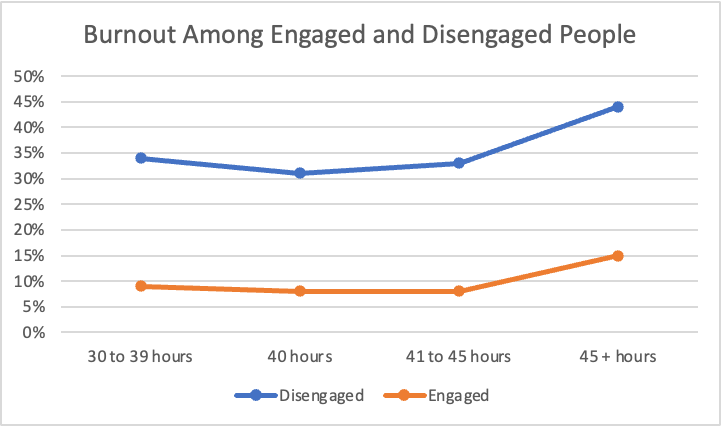
Two people can work the same number of hours in a similar work environment. One person burns out. The other thrives. The only difference is the one who burns out doesn't find the work meaningful, whereas the one who thrives does.
I see this in my coaching and reporting all the time, and I see it in myself.
When my work and life feel tedious, when I am going through the motions, I start to feel burnout. When I am engaged in what I am doing, when I am taking on meaningful challenges and working at the height of my powers, I feel great. Same effort. Completely different result.
Data shows this theme to be true at every number of hours worked.
Of course, the two types of burnout are not exclusive.
The most damning cases occur when you are experiencing both overwork and zombie burnout, when you are working a ton of hours and find your work tedious and meaningless. You can also love your work, find it full of purpose, and still burnout—for example, if you are going to the well for consecutive 80-hour weeks.
But an observation I’ve made over the last few years is that zombie burnout is becoming as much a risk, if not greater, than overwork burnout.
Especially because zombie burnout isn't just about work, it's about all aspects of life.
How Zombie Burnout Works
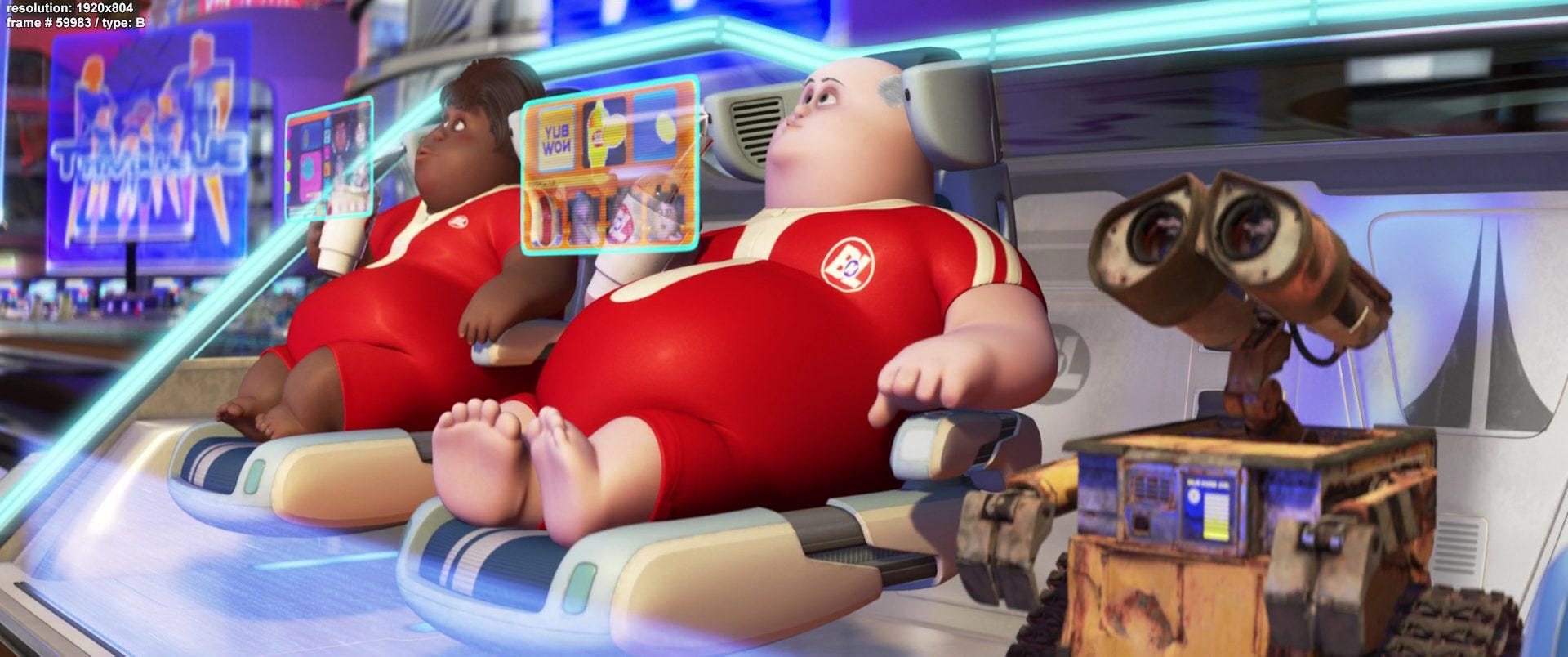
We live in a convenience-first culture. Everything is engineered to be fast, seamless, and effortless. It can soothe us and help us zone out. But over time, zoning out leads to its own kind of restless exhaustion. If we don’t have any friction in our lives, we all too easily become numb and hollowed out zombies. There’s a reason the movie WALL-E is a not a utopia, but a dystopia.
What we really crave isn’t ease—it’s meaningful engagement in things we care about.
This requires putting ourselves in the arena. It requires ditching the too-cool-to-care attitude that is really just fear of embarrassment or failure. It requires overcoming the “epidemic of nonchalance.”
Ideally, you have a job that is full of meaning and challenge. But this isn’t going to be the case for everyone. And that’s fine! Even if your job is just a job, you can find sources of aliveness, challenge, and meaning outside of work and dramatically reduce your risk of zombie burnout.
But if you don’t have these sources of meaning, challenge, and aliveness anywhere in your life, then you end up spending a lot of time going through the motions.
Perhaps you become so desperate for resonance, so desperate to feel anything, that you start doomscrolling, gossiping, getting caught up in outrage politics, and checking and re-checking news websites all day. These temporary hits of excitement and anxiety feel like focus, but they are synthetic, shallow, and fleeting—and leave you worse off than before.
Researchers call it “The Need for Chaos.”
It explains that when life is dull, people are more likely to seek out chaos, even if it’s detrimental to themselves and their communities. A 2024 meta-analysis in the journal Nature found the factor showing the strongest association with conspiracy beliefs to be “social alienation.” Additional research shows that boredom is also a driving force.

A recent and popular post on “X” came from someone who goes by the name Blue:
“We have normalized overconsumption. Listening to a podcast while we walk, scrolling reels in the toilet, listening to music while we cook, watching a show on Netflix while we eat. It’s as if there is NO breathing space for your mind. You’re constantly trying to fill the void, the stillness and yet here you’re complaining about feeling groggy and demotivated.”
It near perfectly encapsulates zombie burnout.
Underneath it all is a hunger for more genuine sources of meaning and aliveness in our lives.
Do Hard Things (But Not All Hard Things Are Worth Doing)
Hans Selye, the pioneer of stress research, made a vital observation: The same stressor can strengthen or break you—depending on what it’s for. When a challenge is meaningful, your nervous system adapts better. You recover faster, respond more effectively, and stay healthier.
But stress without purpose, especially when it’s chronic, is corrosive. It raises inflammation, dysregulates your nervous system, and wears you down. It feels like running a race with no finish line and no reason to be running. You’re not building capacity—you’re just burning through it.
Still, many of us end up chasing goals we don’t really care about. We follow the crowd, mimic metrics, and say yes to things that look good on paper. But imitation without meaning breeds fatigue. It’s not just the weight of the work. It’s the emptiness behind it.
This is one of the biggest problems with optimization culture. The cold-plunging, waking up at 4 AM, and going to boot camps is great if you genuinely find that stuff meaningful. But if you don’t, it just creates more fatigue.
It's also true that if we don't have any stress in our lives—if we aren't working on meaningful challenges, if we don't cultivate a reason to wake up in the morning—then that, too, degrades our vigor, health, and well-being.
In other words, we thrive off some stress in our lives, and stress is mediated by meaning. We need to do hard things, but not all hard things are worth doing.
You Don't Always Need More Rest—On Avoiding and Reversing Zombie Burnout
You don’t need to be a world-class anything. But you do need something that lights you up. A project, a practice, a purpose that asks something of you—and gives something back. Sometimes you can find it at work. Sometimes you can find it out of work. If you’re lucky, it’s both.
The remedy for type-1 burnout is resting, recovery, and scaling back.
The remedy for type-2 burnout isn’t necessarily to do less, but to shift how you are spending your time and energy.
Train for a marathon. Start on a reading list. Get back to guitar. Go to the woodshop. Get involved in community. Stop doomscrolling. Stop going through the motions. Find activities that light you up. Make sure you don’t outsource your entire life to AI.
Realize that creating the illusion of working hard is often more tedious and tiresome than actually working hard. Also realize that if you think you are protecting yourself from the pain of failure by not really trying at anything, what you are actually doing is diminishing the richness and texture of your life.
Zombie burnout is subtle. It creeps up on you. It doesn’t crash your system, it dulls it. The way to prevent and treat zombie burnout is to identify what numbs and distracts you and then do your best to trade it for what makes you feel alive.
In all our talk about burnout we’ve lose sight of just how important it is to burn in the first place. The goal isn’t to stop burning altogether. It is to burn bright without burning out.