

Entrepreneur and investor Will Mandis recently wrote, “‘It takes hard work to achieve anything great is a dangerous lie.’ Great output comes from finding an activity that feels as natural as breathing or walking and great work becomes the very substance of your existence. If it feels like a grind you’ve found the wrong expression.”
His statement garnered a strong response. I suspect that’s because while what he wrote is decidedly wrong, its underlying spirit is mostly right, and a welcome push-back against the pseudo-excellence and hustle porn that is widespread on the internet.
First things first: in the vast majority of fields, you absolutely must work hard to achieve anything great. Contrary to Mandis’s opinion, this is not a “dangerous lie.”
The psychologist Anders K Ericsson spent his life studying talent acquisition and peak performance. His work led to the Malcolm Gladwell-popularized ‘10,000 hour-rule,’ which states that to be world-class, you need to practice for at least 10,000 hours.
Dig a little deeper into Ericsson’s work, however, and you’ll see the story is more complicated. It’s not the sheer volume of hours practiced that underlies one’s rise to greatness in fields like music, medicine, chess, and sport. Rather, it’s what you do in those hours. Ericsson found that great performers across domains engage in a particular type of training, what he called deliberate practice. Deliberate practice is characterized by blocks of deeply-focused, hard work followed by periods of rest and recovery.
As Ericsson wrote in his original 1993 paper, “deliberate practice requires effort.”
Now just because you work hard doesn’t mean you’ll be great. You also need a baseline level of innate talent and the right environment. But barring rare circumstances—for instance, a genetically freakish athlete—hard work is always necessary.
My own decade-plus coaching, reporting, and writing on performance mirrors Ericsson’s findings. I’ve interviewed and worked with over 500 elite performers across domains. Every one of them has talent. And every one of them works very hard.
Hard Work is Not the Same as Suffering
David Senra, host of the popular Founders podcast, recently wrote that “excellence is the capacity to take pain.”
And yet, what others view as painful—going to bed and waking up early, clocking long hours, doing deep-focus work—elite performers often don’t mind, because they want to do it. Elite performers, at least those who are able to sustain their greatness over the long haul, come to enjoy working hard.
A problem with the kind of pseudo-excellence and performative greatness that plasters the internet (what Mandis calls “grindslop”—a term I adore) is that it portrays hard work as suffering and touts it like a badge of honor. Train until you puke. Pull consecutive all-nighters. Be fueled by anger and a desire to prove everyone wrong.
Hustle-culture grindslop makes you think that if you’re not miserable or bordering on burnout, you’re not working hard enough. But this couldn’t be further from the truth.
One of the greatest competitive advantages is having fun. People love to romanticize the athlete, artist, or entrepreneur who has a chip on their shoulder, who is fueled by anger and resentment. It’s the David Goggins approach to greatness. Sometimes you’ve got to flip that switch. But the truth is that if you’re not having fun, you are not going to last long at whatever it is you do, and you certainly won’t get the best out of yourself. There’s this foolish misnomer that you either have to be full of intensity or full of joy. But that’s nonsense. Joy and intensity can coexist, and in the best performers, they almost always do.
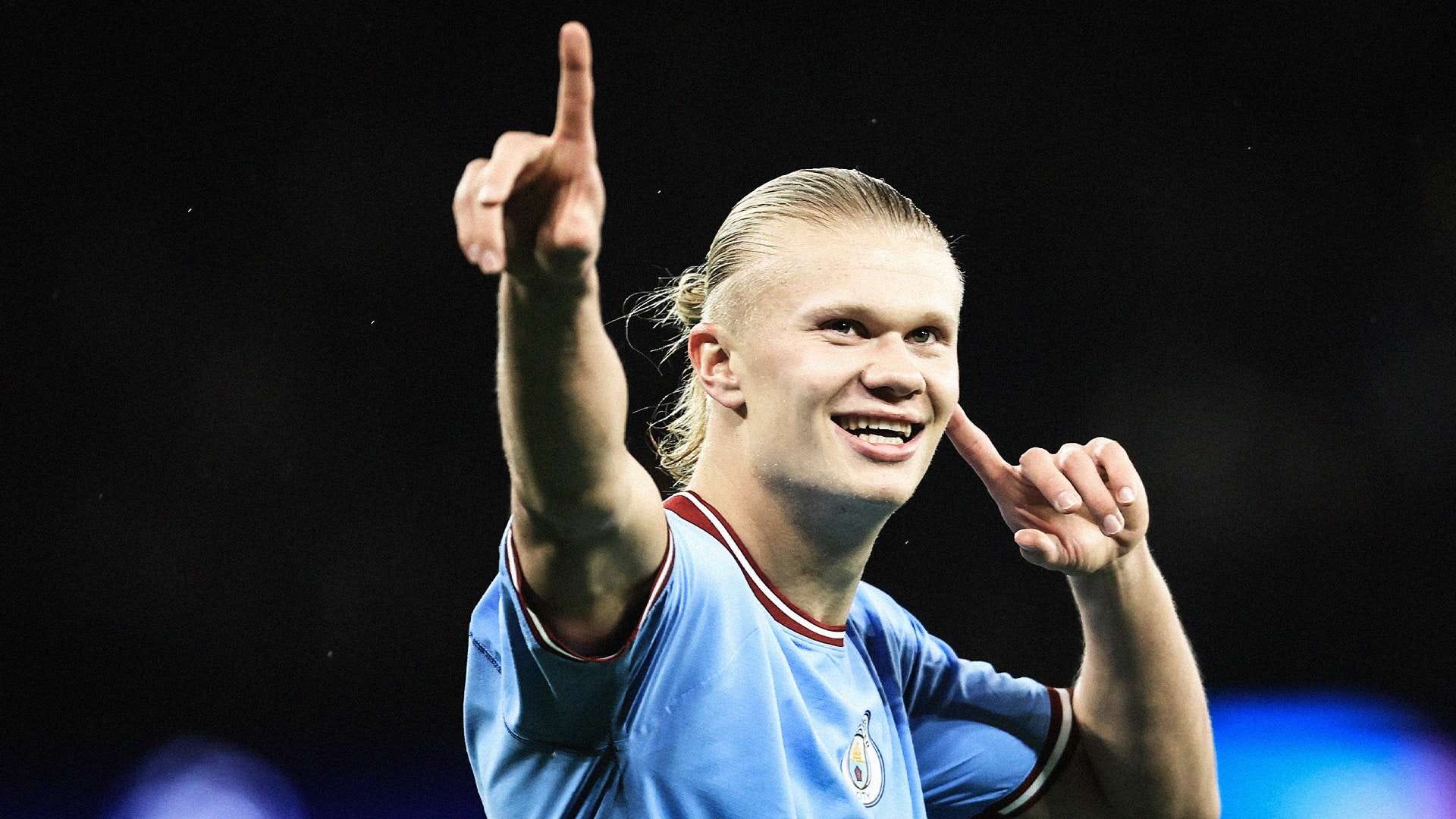
We’re seeing this play out right now on one of the biggest stages in all of sport. Norway’s star soccer striker Erling Haaland is fierce, strong, and intense. He is also a total goofball, known for his big smile and cracking jokes after matches. It’s clear to anyone watching this World Cup that Haaland is not suffering for greatness. He’s having loads of fun.

Greatness doesn’t mean everything will always be lovely, or that en route to attaining your potential is a whole lot of hand-holding and singing kumbaya. Sometimes there will be legitimate pain. But if everything is always painful, if the pain is the dominant quality of your experience, then you are doing it wrong.
First Fit, then Grit
Early in my career, I leaned on hard work and gritmaxxing to pursue corporate consulting. I was miserable. When I transitioned to becoming a writer, it required an equal amount of hard work and grit (if not more), but I enjoyed it.
I was a pretty good consultant, but I never accomplished anything great. A decade into my professional writing career, I’ve got a New York Times bestselling book that is a favorite among countless athletes, entrepreneurs, and craftspeople. All told, my work has been read by millions.
Both corporate consulting and writing demanded loads of hard work. But only the latter, to quote Mandis, “feels as natural as breathing or walking and great work becomes the very substance of your existence.” (And even so, it is still very, very hard!) I’m a lot closer to greatness as a writer than I ever was as a consultant, and I have a lot more fun as a writer too.
A study published in the journal Nature evaluated the careers of artists, film directors, and scientists. It found their best work followed a pattern of exploration, during which they tried multiple things, followed by exploitation, when they found something that worked and doubled down.
In other words, before doubling down on grit, first you need fit—a good match between your innate talent, temperament, and what you are doing. Without fit, hard work is tedious and painful. When you have fit, hard work is meaningful, satisfying, and enjoyable. Is this pattern true for every second of the path? Of course not! But is it true on the whole? Absolutely.
The Actual Truth About Greatness
Herein lies a hidden cost of grindslop: it makes people think that suffering is simply the price you pay for trying to be great—so people toil away working suboptimally for years instead of changing their approach. The result is that they feel and perform worse.
It does take hard work to achieve anything great. (And lots of it at that.) Everyone craves the transcendent moments when you become one with what you’re doing, and you’re effortlessly at your best. But those moments only occur after years of hard work. And even then, they don’t last forever. Unconscious competence requires conscious competence.
Mandis’s mistake is that he falsely equates hard work and suffering. But hard work is not the same as suffering. The real “dangerous lie” that Mandis speaks of is that greatness requires the latter. If anything, too much suffering is a strong indicator that your efforts ought to be adjusted or pointed elsewhere.
Work hard. Have fun. Keep going.
Great piece, Brad.
If you're not having some fun, what's the point? Don't take it all so seriously.
Have fun, spread love, and be greater.
Absolutely! I wrote a piece on a similar subject last week about how the greatest creative achievements have come from play. From The Beatles, Tolkien, Rick Rubin talks about it a lot too. In the age of optimisation we've forgot the true essence of genius.