

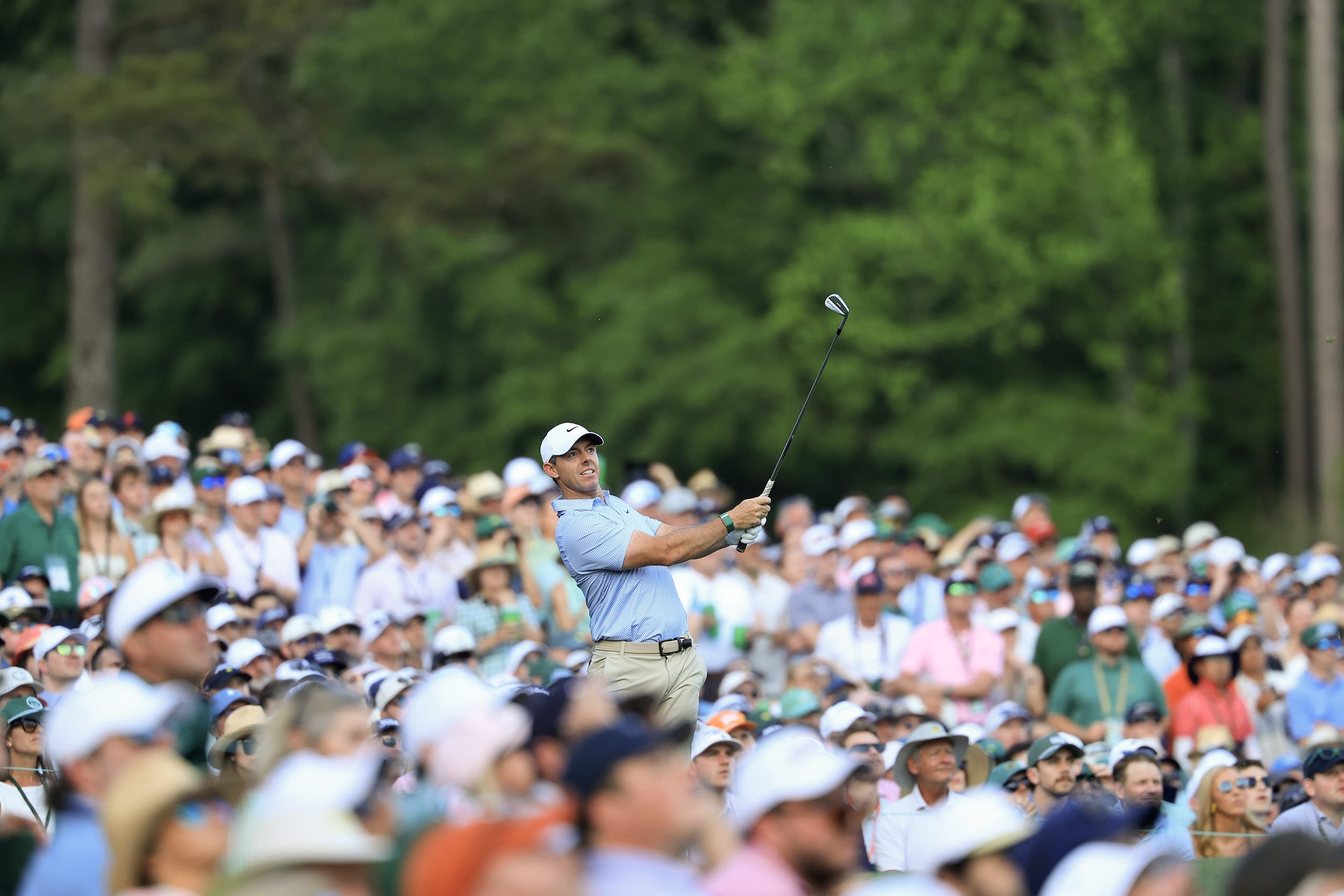
Of all the great storylines from the recent Masters golf tournament, the one that is most relevant doesn’t involve golf at all.
Augusta National has a simple rule: no phones allowed anywhere on the property for the entire week of the tournament. The course, the driving range, the clubhouse—all of it is off limits.
The rule isn’t just ceremonial either. During this year’s tournament, former major champion and four-time Ryder Cup participant Mark Calcavecchia was escorted off the premises by security. His offense? Having a cell phone on him.
When Golfweek reached out to Calcavecchia, he didn’t deny the allegations or even complain about the punishment. He simply explained: “I’ve got nothing negative to say about Augusta National Golf Club and the Masters, so I think we should literally hang up right now.”
A Deep Life Requires Intimacy
Traditionally, people think of intimacy in terms of a relationship with another person. While that certainly can be the case—and is a beautiful thing when it happens—you can also develop intimacy with an activity, craft, or community. It is a sense of familiarity, respect, and attention that helps you feel connected to what you are doing and to yourself. It requires minimizing distractions and getting as close as possible to your pursuit. It’s being in the pocket of a deadlift, song, or painting; it’s being immersed in developing an idea, leading a team, or learning a new skill; it’s sharing an experience with a group during which everyone is present.
I have no doubt that a big part of the aura at the Masters is its intimacy. This would be impossible if everyone had their phones.
The Master’s no phone rule is in stark contrast to how many of us navigate the world.
You try to read a book and can’t focus. You’re out to dinner with loved ones and find yourself checking your phone under the table. You don’t even have your phone on you, and yet you still feel it buzz in your pocket.
The result of our compulsive phone use is what psychologists call digital dementia or brain rot. It describes the forgetfulness, foggy thinking, and fatigue caused by the chronic overuse of our phones. Our brains become so accustomed to fractured attention that they lose the ability to focus deeply on anything.
Multiple studies show structural changes in the brains of heavy cell phone users—which is to say, nearly all of us. A 2024 systematic review found reduced gray matter volume in brain regions associated with decision-making, emotional processing, and self-control among problematic smartphone users. The prefrontal cortex—the part of the brain responsible for complex thinking and impulse regulation—shows reduced activity the more someone uses their phone. Persistent cell phone use also messes with your nervous system. It puts you in a constant state of alert and low-grade stress. As a result, you’re never really off, but you’re also never fully on. You’re constantly in this middle-ground state, leading to a (very modern) feeling of restless exhaustion.
Compare this to the Masters, where you can feel the depth of focus and attention in the air. Greatness requires it.
Fortunately, a 2025 study found that restricting smartphone use for just three days—which is essentially what the Masters does—altered brain activity in regions linked to reward processing and cravings, showing patterns similar to those seen in substance addictions. The tournament lasts a week. Augusta National is accidentally running a mass neurology experiment every April. And the results are startlingly positive.
I’ve been told by people who attend the Masters that the first day or two can be hard, but then they quickly ease into the phone-free experience. They stop feeling phantom vibrations or even thinking about their phones. It’s no surprise that come mid-tournament, everyone is utterly locked in. Instead of trying to capture an experience on a phone, they are fully experiencing it. People feel fully present and alive. It’s a powerful antidote to modern feelings of disconnection, dissociation, and numbness.
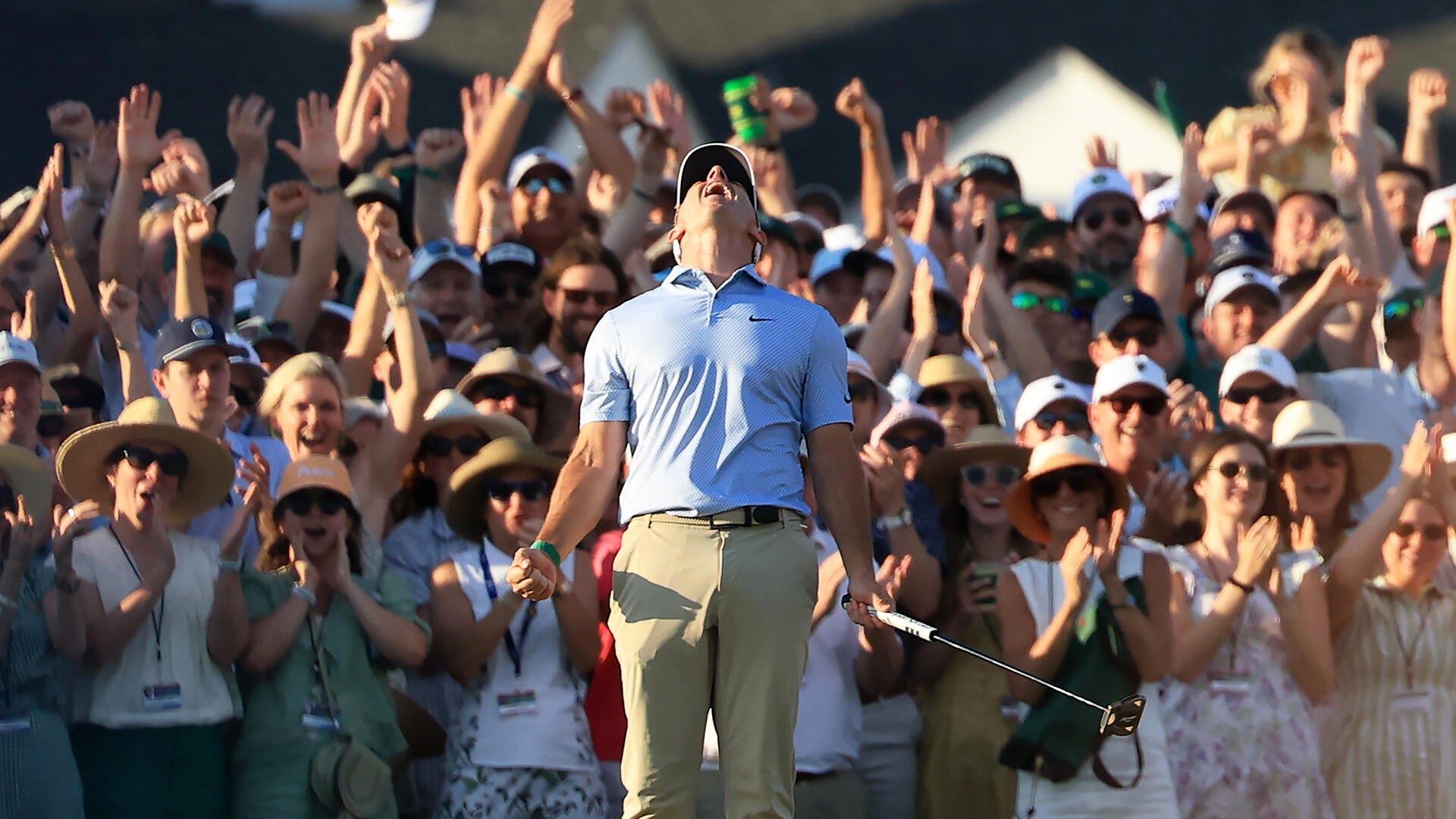
There’s Much to Learn from the Masters
We are at a point in history—not nearing it, but here—where everyone is going to have to decide if they are content to numb themselves with an endless stream of digital slop or if they are going to fight for their humanity and touch grass and challenge themselves and create and contribute and love.
Research consistently shows that people are most fulfilled when they care deeply about meaningful projects and experience presence in relationships and community. Nobody feels or performs their best while mindlessly scrolling. The things that make life worth living—deep work, physical intimacy, creative expression, genuine connection—all require the type of sustained attention that our phones are systematically eroding.
Perhaps the greatest risk of the modern world is that we go wherever the current takes us, like automatons floating along a pixelated conveyor belt to nowhere. The only thing that separates us from this dystopia is ourselves. Our agency—our attention, our capacity to think, create, and love—must be fought for. When you work with deep focus on an activity or craft, or when you throw yourself fully into an experience, you feel the opposite of existential longing. You feel situated in yourself and the world.
If we want to perform our best, feel our best, and experience depth, meaning, richness, and texture—essentially all the good stuff in life—then we need to create our own versions of the Master’s no-phone rule.
If we value education for our children, there should be no phones in schools. If we value intimacy with our partners, there should be no phones in the bedroom (at least at night). If we value books, we should turn our phones off and put them in another room while we read.
These are three of many examples, but I give them because there have been stark declines in scholastic performance, sex, and literacy—all of which have coincided with the rise of smartphones.
On education: The 2024 Nation's Report Card shows that American students' reading scores are at their lowest point since the early 1990s. Around 40 percent of fourth graders now score below the basic level in reading—the largest percentage in over two decades. Eighth-grade reading scores have been falling in a straight line since 2017.
On sex: According to the General Social Survey, 55 percent of American adults reported having sex weekly in 1990. By 2024, that number had fallen to 37 percent. Among young adults ages 18 to 29, the share reporting no sex in the past year doubled between 2010 and 2024, from 12 percent to 24 percent. This isn't just a young person's problem either: among married adults, weekly sex dropped from 59 percent to 49 percent over the same period. As sociologist Mark Regnerus of the University of Texas put it, "The smartphone is generating new and interesting content, which is slowly but surely supplanting the people around us."
On literacy: Only 14 percent of 13-year-olds reported reading for fun almost every day in 2023, down from 27 percent in 2012. A 2025 study using 20 years of American Time Use Survey data found that reading for pleasure has declined by about 3 percent per year.
All three declines map onto the same timeline: the mass adoption of smartphones, which reached saturation among American teens around 2012-2013—precisely when test scores peaked and began their slide, when sexlessness among young people began its sharp rise, and when reading for pleasure started its accelerating decline.
The point isn’t to be a purist. After all, many of you are probably reading this article on a phone right now. Digital devices are a part of modern life and for all they disrupt, they also carry many incredible benefits. Regardless, they aren’t going away, which is all the more reason to carve out times and spaces where we don’t use them.
There’s a reason the Masters feels different from every other sporting event. It’s not just the stunning azaleas, or the history, or the green jacket. It’s that for one week a year, thousands of people put their phones away and actually watch. They listen to the ping of a driver, follow the arc of a ball against the sky, and erupt together in real time, in real life, shoulder to shoulder.
It’s crucial to ensure the Master’s isn’t the only experience like this, because focus and intimacy are necessary not only to excellent golf, but also to an excellent life.
If you enjoyed this post, you’ll love my new book, The Way of Excellence. It’s a practical guide to the pursuit of deep focus and personal excellence in a chaotic world, and an instant New York Times bestseller. You can purchase it here.
Great piece. And it makes a really important point I think: so much writing on the smartphone says "it's really bad for you and you should cut down". Bad news - we aren't that disciplined or that smart. We need rules, like The Masters.
We need to underestimate ourselves. We are kids in the face of the phone. I devote two hours of my day to intentional mental silence to fight the phone. I do it on the commute because that's where it fits in my day. And I wear a blue high vis vest saying "Phone Free Commute" to enforce it via social commitment. It's ridiculous but it works. I'm treating myself as a kid (I'm a midlife crisis man, and I don't care :-)). I'd never stop doing it - the digital dementia you describe receded fully after a few weeks, and I'm now three months in. The prize is just incredible.
I'm not saying everyone needs to wear a blue high vis vest. But we are going to need to treat ourselves like kids. Use a little imagination. Or hardcore rules. Like The Masters.
Excellent